
Receiver Pocket Milling
High-efficiency end mills machine internal cavities and channels in receiver components.
High-rigidity cutting tools for military machining of high-tensile alloys, armor plate, airframe structures, and other defense CNC machined components.
Defense and military industry manufacturing combines demanding dimensional and structural requirements with hardened steels, titanium, high-strength aluminum, and composite materials. Much of this work overlaps with the aerospace and heavy-equipment sectors in Bauron's industry solutions.
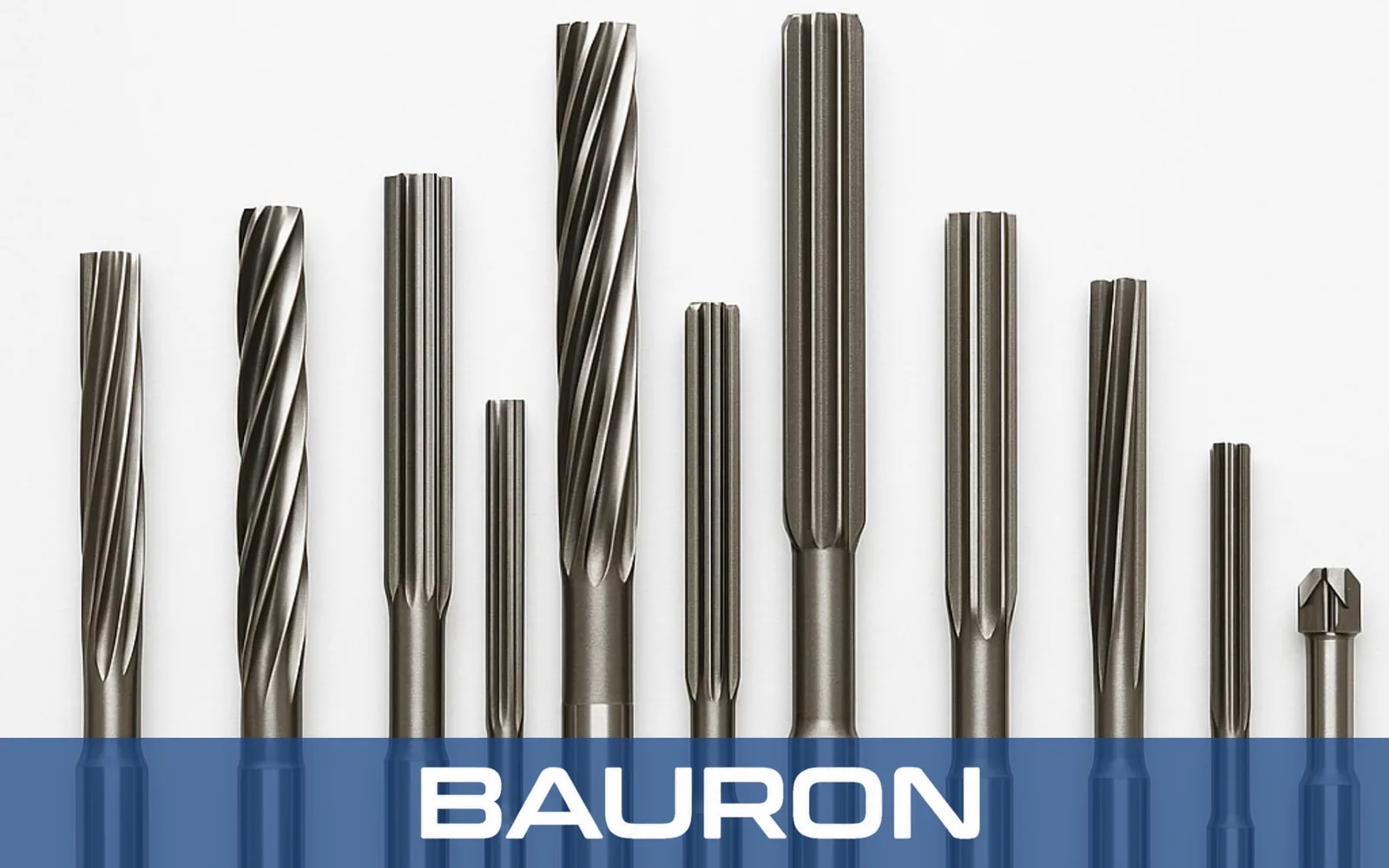
High-efficiency end mills machine internal cavities and channels in receiver components.
Heavy-duty chipbreaker end mills remove stock from thick armor-plate weldments and suspension brackets.
Double-angle cutters produce threads and V-profile features on naval and ordnance components.
Tapered mills and dovetail cutters machine barrel flutes, dovetail tracks, and sight-mount features. Chamber reamers cut the internal cartridge profile at the breech end of the barrel.
Multi-axis cutters remove stock from titanium airframe ribs and other lightweight structural components.
Defense and CNC military components may use hard, heat-resistant, or impact-resistant materials, requiring cutting tools with suitable edge preparation, thermal performance, rigidity, and chip evacuation.
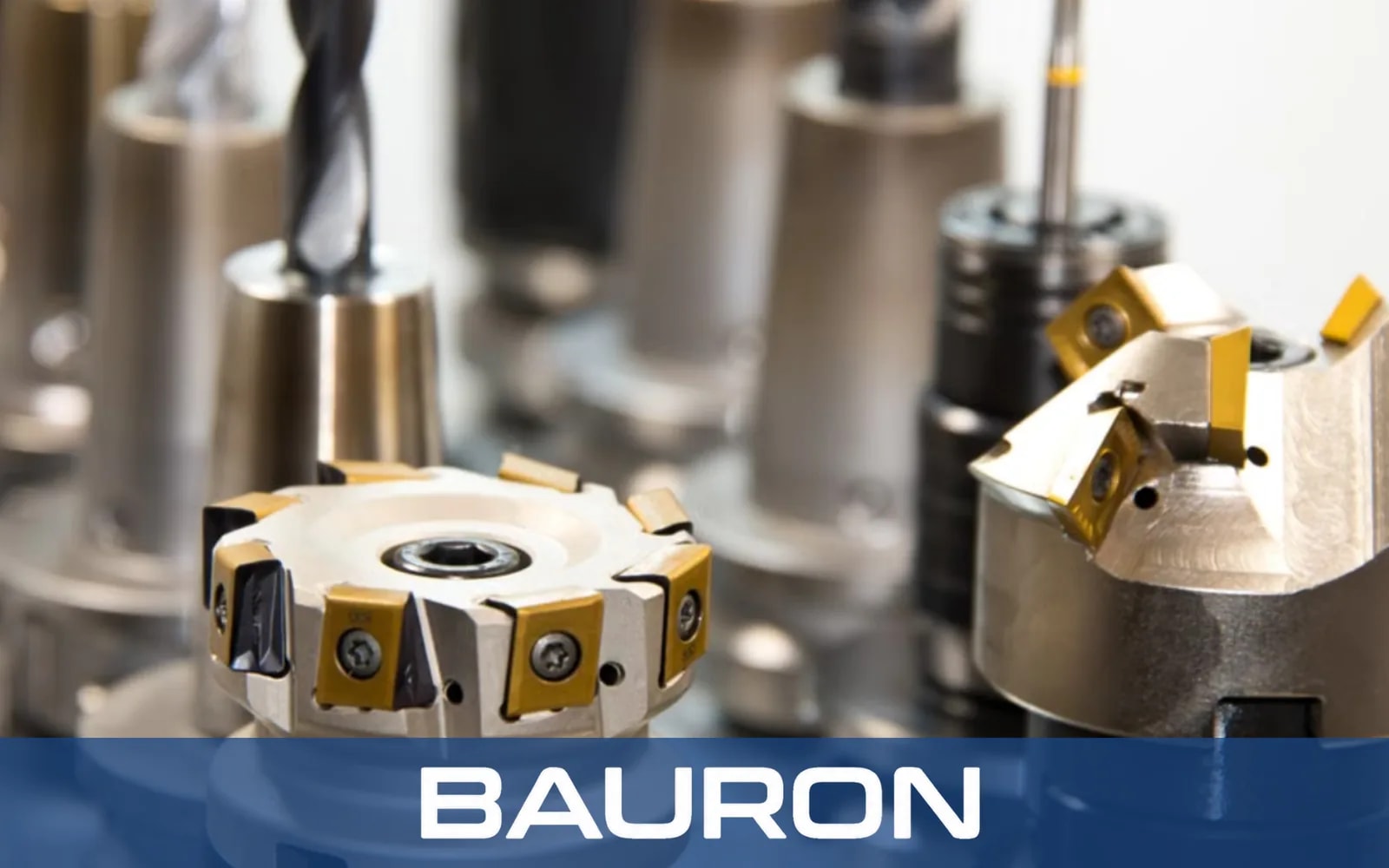
AR500 and Hardox plate benefit from shock-resistant carbide substrates that reduce tooth-chipping risk during hard passes.
Low-vibration geometries and heat-resistant coatings help manage thermal load in titanium machining.
Polished, open-flute tools support chip clearance during high-rate pocket roughing.
Heat-resistant AlTiN or nACo coatings help maintain cutting-edge performance in 17-4PH and 15-5PH stainless steels. Long, straight bores in these alloys can be produced with gun drill bits.
Remove stock from tough armor plate and receiver forgings.
View toolMachine dovetail tracks for sights, optic mounts, and other mating features.
View toolAdd serial numbers and identification markings to components.
View toolFinish hinge-pin bores, pivots, and other close-fit holes.
View tool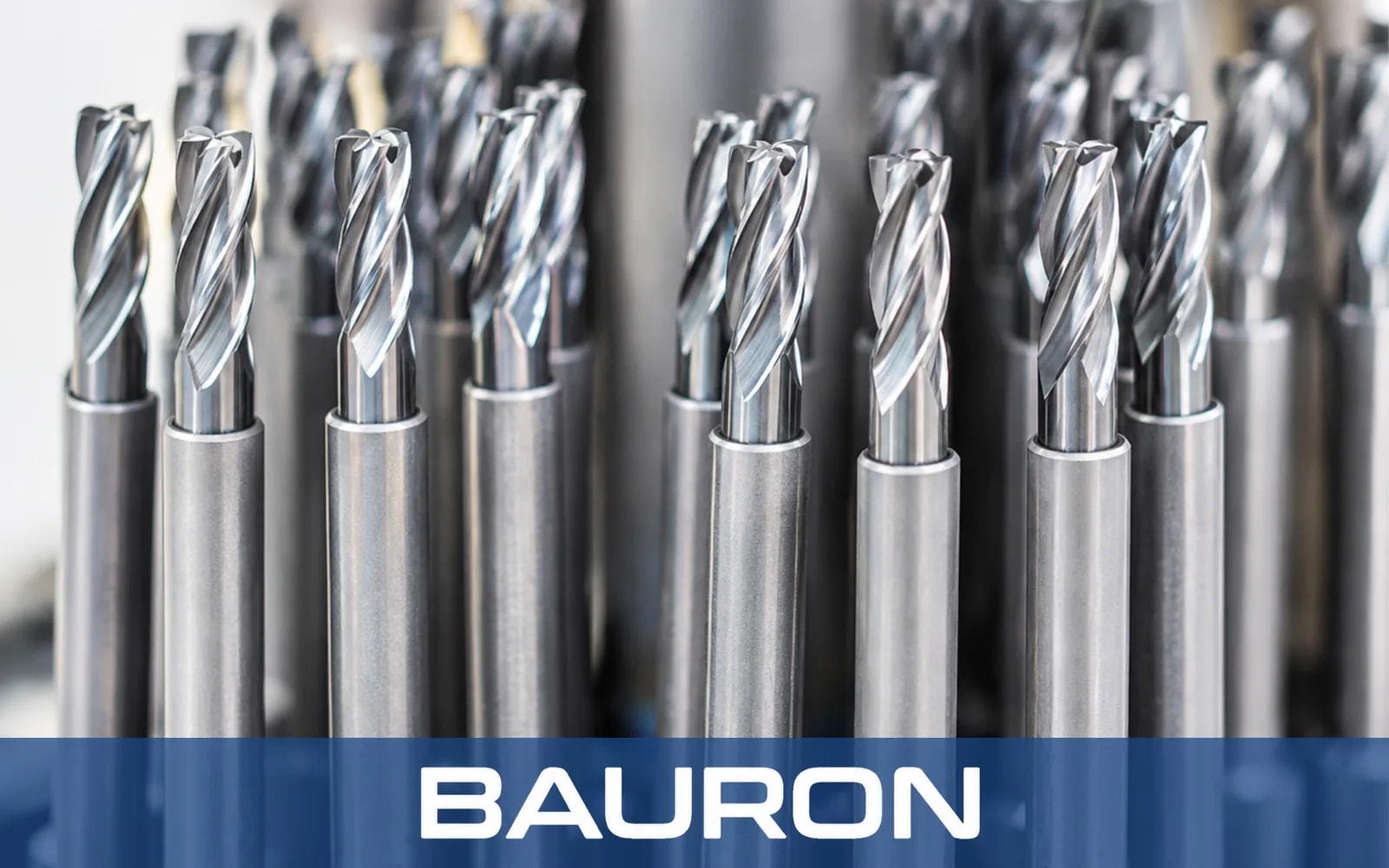
Application-specific tools support close dimensional control on demanding flight, tactical, and naval components, with carbide reamers finishing pin and pivot bores to size.
Reinforced carbide cores can withstand interrupted cuts in armor-plate weldments while reducing edge-chipping risk.
Heat-resistant PVD coatings help slow cutting-edge breakdown during high-temperature alloy machining.
Consistently ground form tools can support part-to-part dimensional repeatability across production batches.
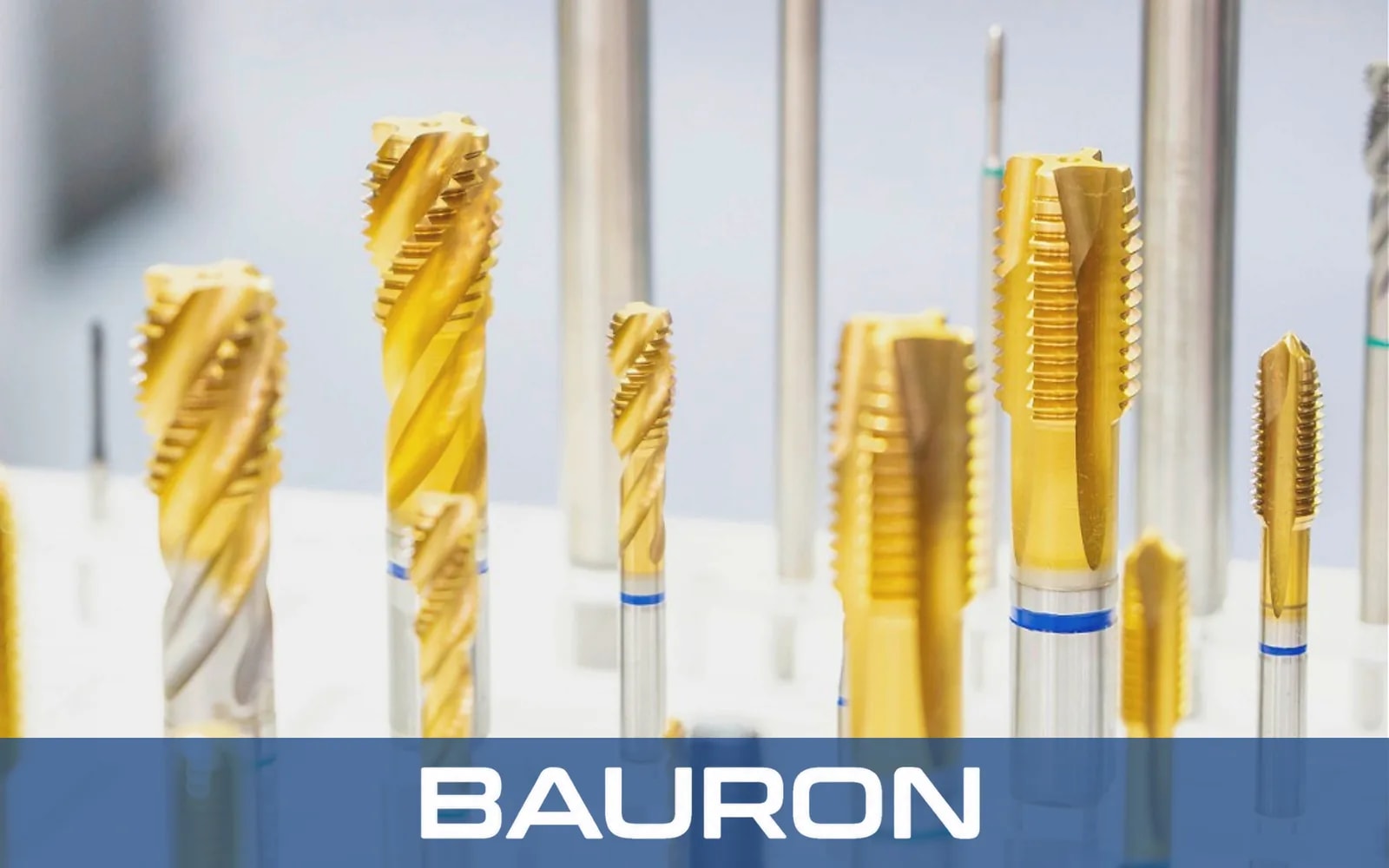
Achievable tolerances depend on the machine, workholding, material, tool condition, thermal control, and inspection method. Application-specific tooling can support close fit and alignment requirements when the full machining process is controlled.
Common materials include AR500 armor plate, titanium alloys, 7075-T6 aluminum, 17-4PH stainless steel, and carbon-fiber composites.
Fine micro-grain carbide substrates, prepared cutting edges, and multilayer nACo or AlTiN PVD coatings can improve resistance to friction, heat, and interrupted-cut shock.
Receiver-pocket mills, barrel-fluting cutters, dovetail tools, and other custom cutting tools can be developed by Bauron around the component, material, access, and machine requirements.
Discuss armor-plate cutters, receiver end mills, or custom tooling with Bauron for defense manufacturing applications. To price a specific geometry, request a custom tooling quote and attach the part print.
At Bauron Tools, the design and engineering team can review custom geometry, access constraints, edge preparation, and coating options for difficult defense-component machining.
Talk to Engineering