
Excavator and Loader Frame Milling
High-feed chipbreaker end mills remove stock from thick steel-plate weldments and boom-pivot housings. During frame assembly, bridge reamers align and enlarge mismatched bolt holes in overlapping plates.
High-rigidity cutting tools for CNC machined parts for construction equipment, including tough steel castings, structural forgings, weldments, and hydraulic components.
Across the construction equipment industry, heavy-equipment machining calls for high stock-removal capacity, deep boring, and rigid slotting across large weldments, castings, and tough structural steels. Construction sits alongside energy and oil and gas among the heavy-industry sectors in Bauron's industry solutions.
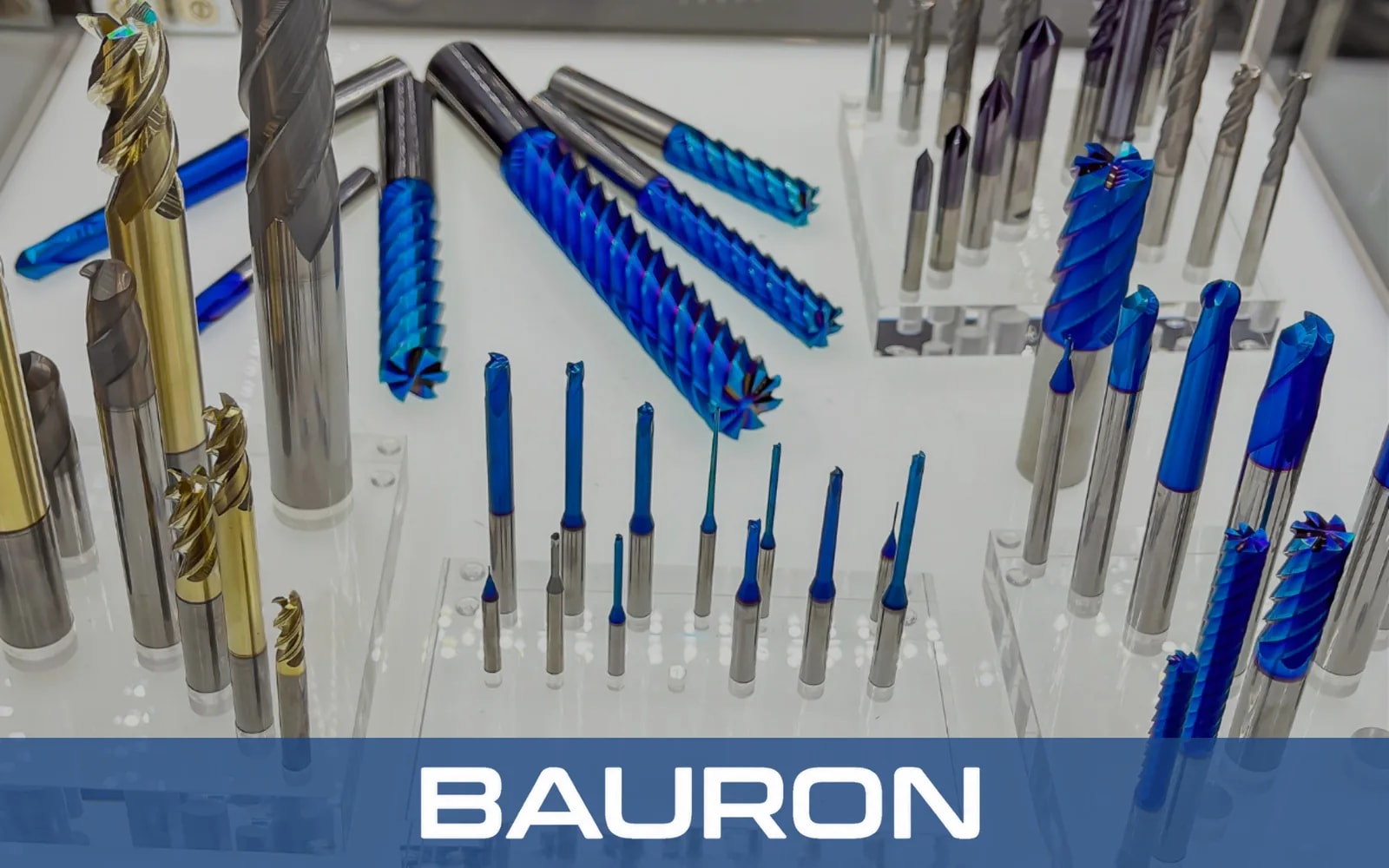
High-feed chipbreaker end mills remove stock from thick steel-plate weldments and boom-pivot housings. During frame assembly, bridge reamers align and enlarge mismatched bolt holes in overlapping plates.
Spiral flute reamers finish large hydraulic-cylinder bores for dimensional control and suitable seal seating surfaces.
Staggered-tooth keyseat cutters machine drive keyways on high-torque earthmoving axles while helping control chatter.
Rigid multi-flute tools machine bucket-pivot and articulation-joint bores in hardened steel components.
Tough carbide end mills profile track-drive sprockets and roller brackets intended for harsh service conditions.
Construction industry machining often combines heavy scale, interrupted cuts, weld seams, and high-tensile alloys, requiring impact-resistant substrates and stable chip-control geometries.
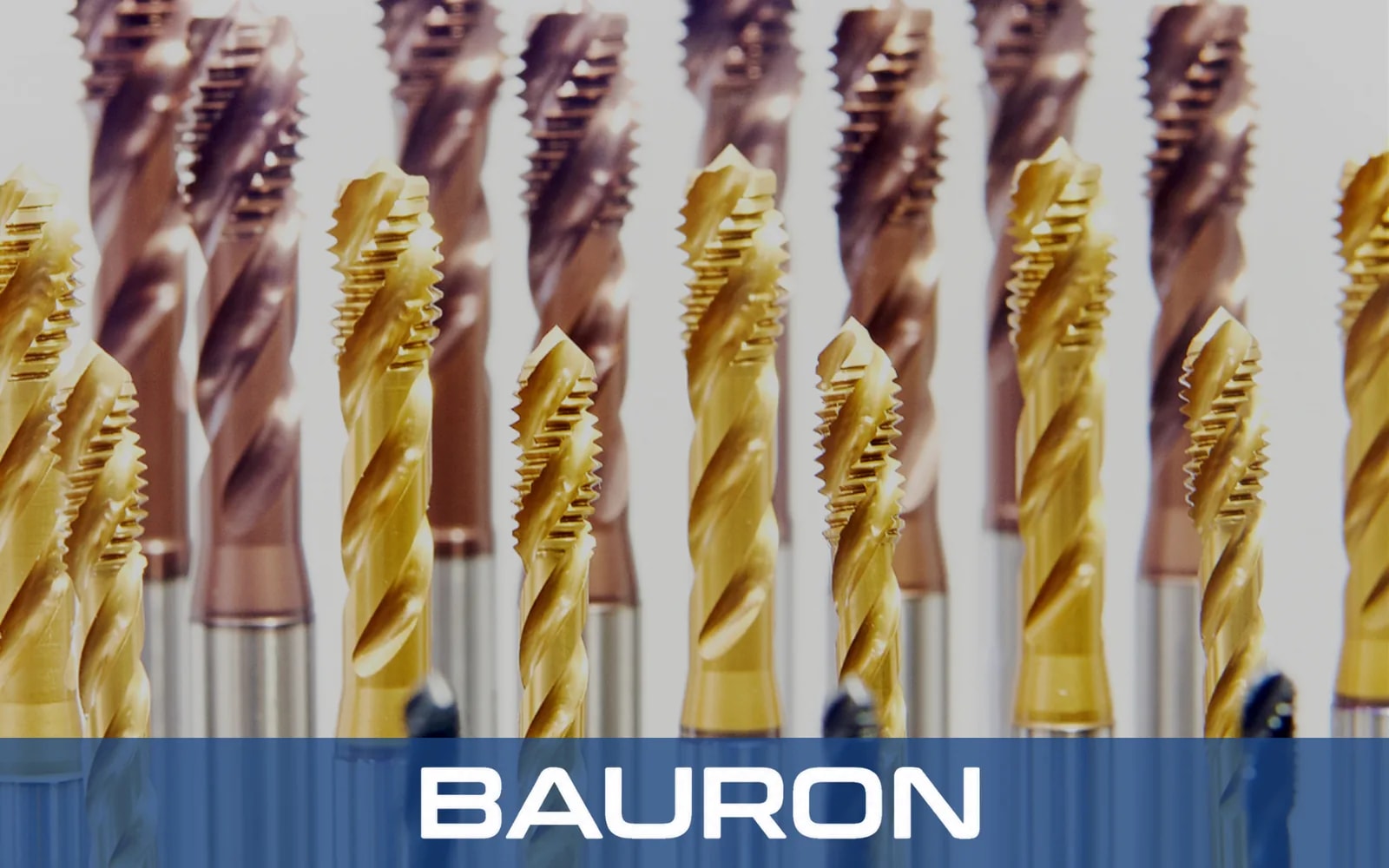
Hardox, Weldox, and AR400 wear plate benefit from impact-resistant carbide substrates that reduce edge-chipping risk.
Wear-resistant coated tools help withstand surface scale and abrasive inclusions in large castings.
Chipbreaker and staggered-tooth geometries help segment and evacuate heavy chips during deep slotting.
Chatter-suppressing geometries improve tool stability across interrupted weld seams and variable surfaces. For bolt and pin holes through thick plate, choose a drill bit for large holes built for structural steel.
Remove heavy stock from tough steel-plate weldments.
View toolMachine drive-axle keyways while helping suppress chatter.
View toolFinish hinge-pin bores and hydraulic-cylinder bodies.
View toolMachine draft angles in casting patterns and forging dies.
View tool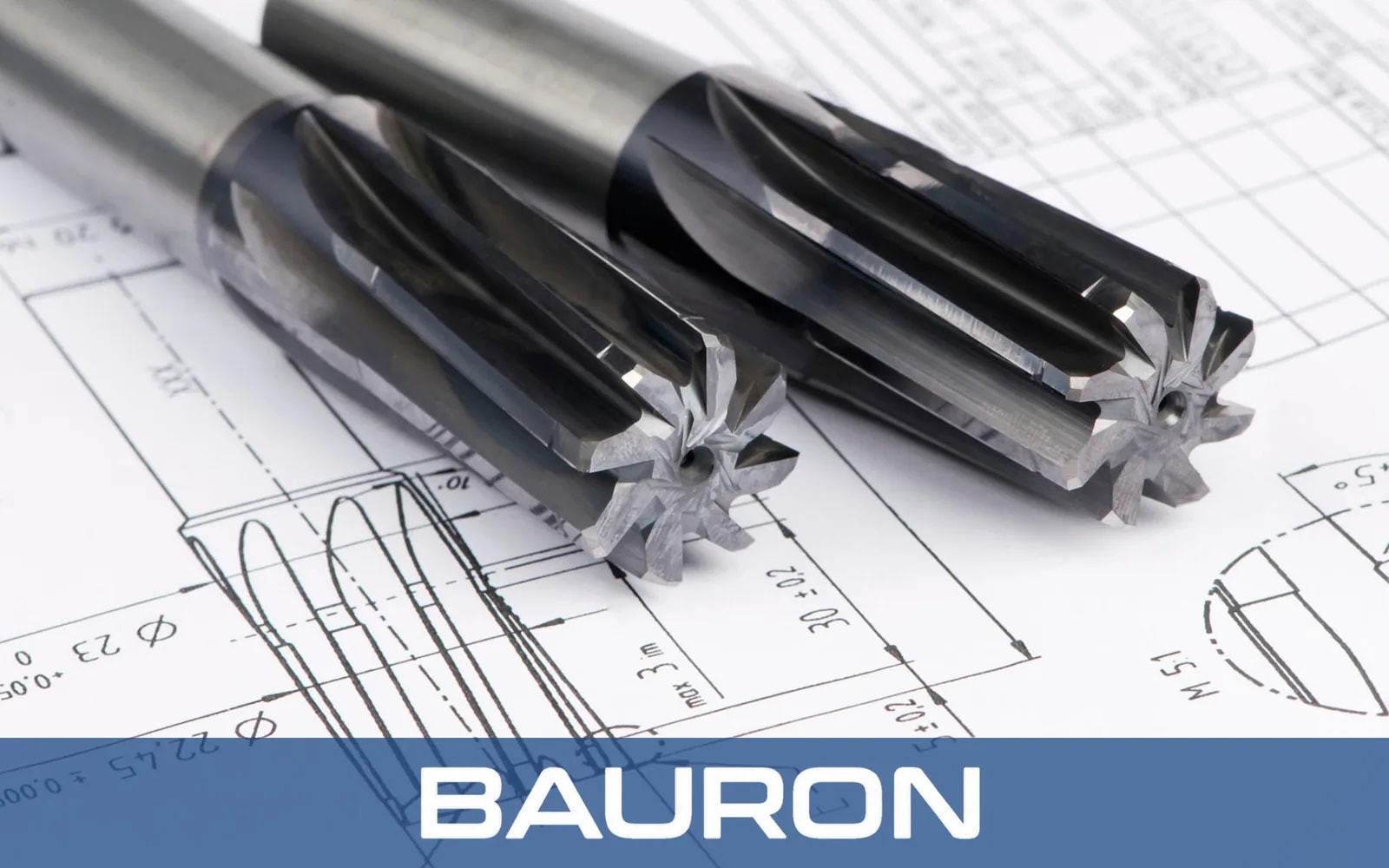
High-feed flute designs can shorten cycle times on large steel weldments when machine power, rigidity, and workholding permit.
Reinforced carbide cores can better withstand interrupted cuts and rough casting scale while reducing tooth-chipping risk.
Heat- and wear-resistant PVD coatings can lower tooling cost per part during sustained steel milling.
Variable-helix and staggered-flute geometries can reduce harmonic vibration in long-overhang structural setups.
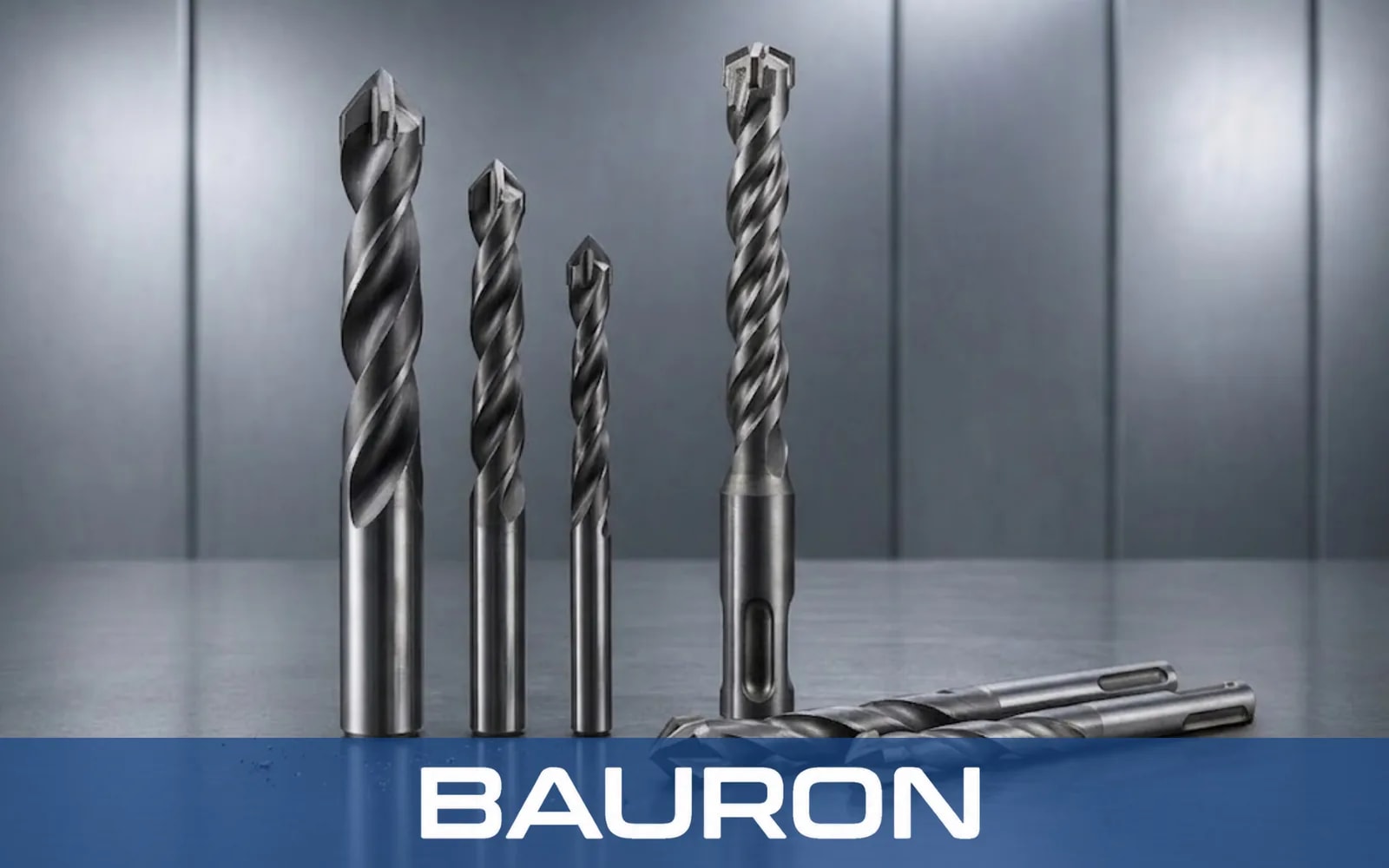
Tolerance capability depends on machine size and condition, workholding, component stability, material, tool wear, and inspection. Rigid tooling supports close control of hydraulic bores, axle keyways, and pivot-pin locations when the overall process is stable.
Common materials include A36 structural steel, Hardox and AR400 wear plate, forged 4140 and 4340 alloy steels, ductile-iron castings, and heavy steel-plate weldments. On the job site, concrete, brick, and stone are drilled with large masonry drill bits rather than metal-cutting tools.
Shock-resistant micro-grain carbide, reinforced cutting edges, and staggered flute geometries help absorb repeated entry impacts and reduce chipping.
Bauron can develop large-diameter reamers, extended-reach slotting tools, and heavy-duty chipbreaker end mills around component size, access, machine capacity, and material. Where holes sit deep inside a casting or frame, extra length drill bits provide the additional reach.
Discuss chipbreaker end mills, hydraulic-bore reamers, or custom steel-milling tools with Bauron for heavy-equipment components. For oversized diameters or extra reach, request a custom tooling quote based on your part dimensions.
Bauron's design and engineering team can review large diameters, extended reach, chip-control geometry, and coating options for demanding heavy-equipment machining.
Talk to Engineering