
PCB Trace Isolation & Scribing
Pointed engraving tools cut thin isolation channels in copper-clad printed circuit boards while helping control edge burrs. For wider tracks, flat-tipped CNC engraving cutters hold a uniform line width.
Specialized micro-precision cutting tools for circuit-board isolation, semiconductor housings, miniature electronic products, and non-ferrous enclosures.
Electronic products machining calls for stable micro-milling, clean edge cuts, and controlled surface finishes across delicate substrates and non-ferrous enclosures. Bauron tooling also supports custom precision die cutting for electronic parts such as gaskets, EMI shields, and insulators.
Pointed engraving tools cut thin isolation channels in copper-clad printed circuit boards while helping control edge burrs. For wider tracks, flat-tipped CNC engraving cutters hold a uniform line width.
Thin, multi-flute end mills profile dense cooling fins in aluminum and copper thermal spreaders.
Rigid CNC tools finish aluminum and quartz processing chambers where close dimensional control and sealing surfaces matter.
Solid-carbide micro drills produce dense pin-array holes for electronic interconnects.
High-speed end mills and chamfer tools machine pockets and edge details in aluminum device housings, and spot drills locate hole positions before drilling.
CNC machining for electronics spans non-ferrous metals, abrasive composites, and engineering plastics that benefit from material-specific cutting geometries. Bauron tooling for medical, robotics, and other precision sectors is grouped under our industry solutions.
Diamond-like coatings or micro-grain carbide can help resist abrasive edge wear.
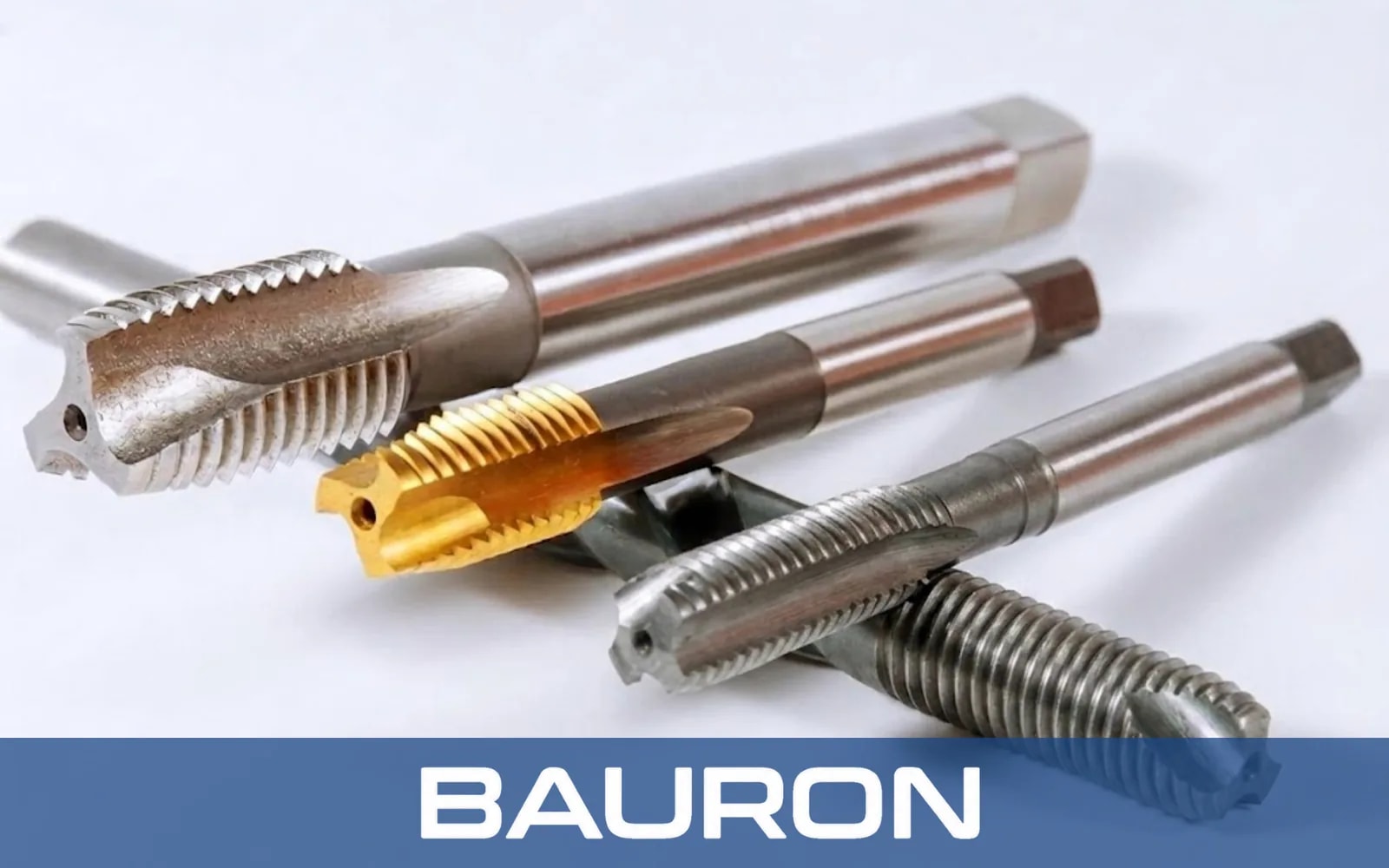
Mirror-polished, high-rake flutes help limit material welding and chip packing. Small threaded holes for enclosure screws can be cut with a machine screw tap.
Sharp, low-friction cutters help reduce smearing and edge burrs on conductive features.
Open single-flute geometries clear chips quickly and help limit heat-related melting.
Scribe fine circuit lines and isolation channels.
View toolCut flat-bottomed characters and wider isolation tracks.
View toolRemove stock from aluminum heat sinks and device enclosures.
View toolMachine smooth micro-channels in fluidic diagnostic boards.
View tool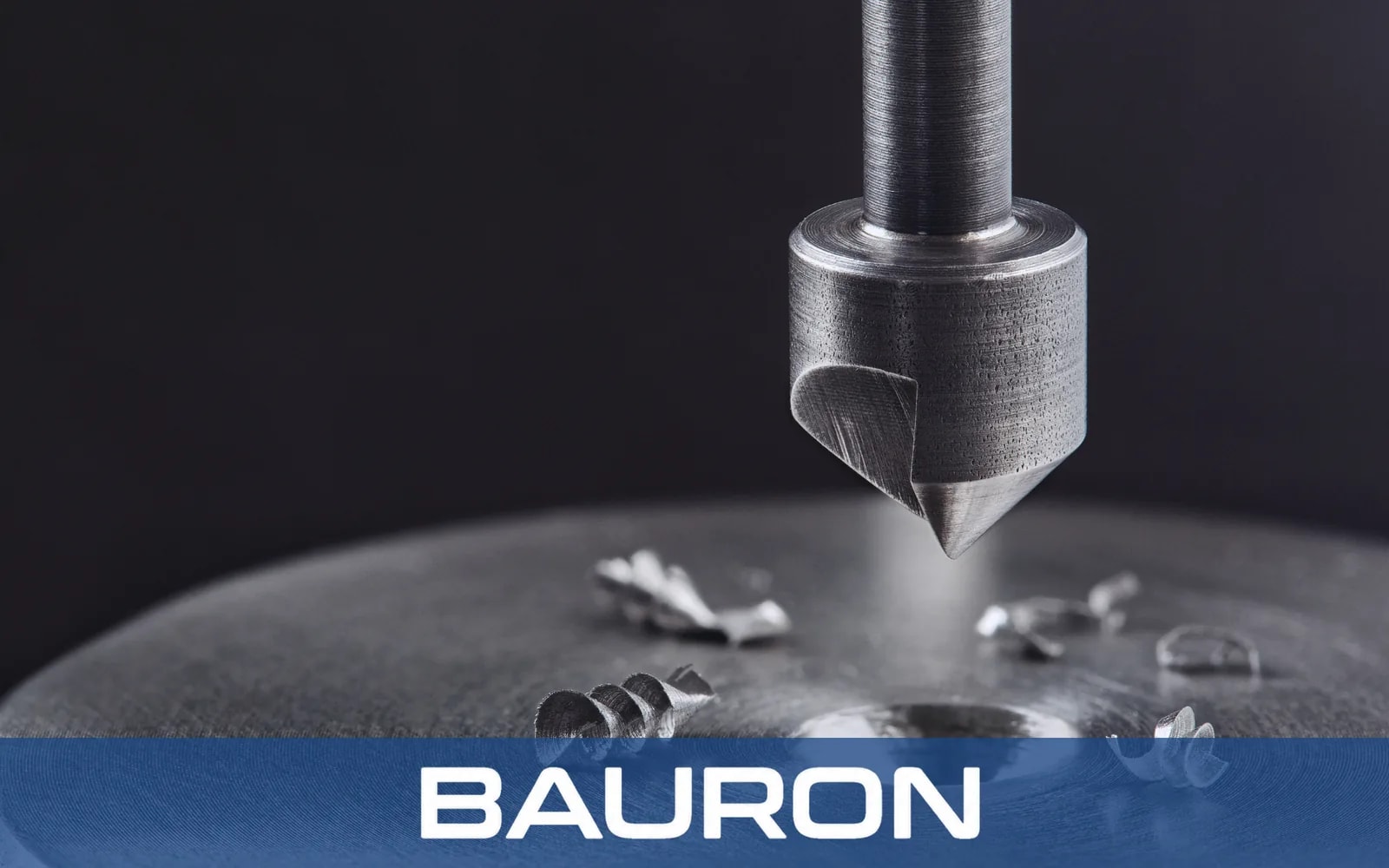
Micro-ground profiles support thin vector details and fine trace-isolation channels when the machine and setup are suitable.
Sharp cutting edges can reduce copper burr formation that may interfere with nearby conductive features.
Balanced tool profiles can limit chatter at high spindle speeds, including applications approaching 60,000 RPM when the setup permits.
Polished flutes promote chip and dust evacuation while helping control heat in synthetic substrates.
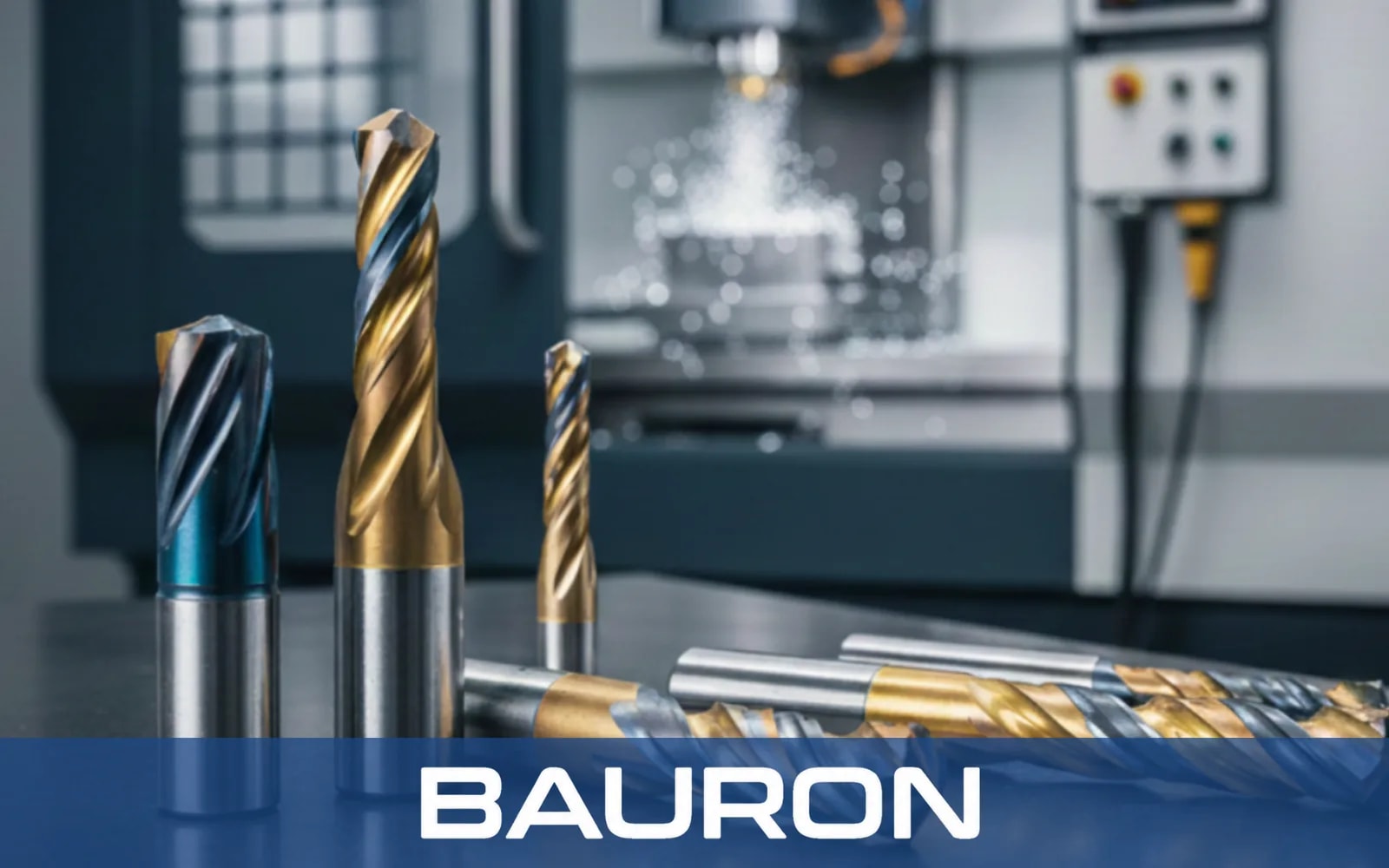
Achievable tolerances depend on tool diameter, machine condition, workholding, material, and process control. Electronics applications commonly prioritize accurate alignment for traces, chamber features, and micro-connectors.
Common materials include copper-clad FR-4 laminates, anodized aluminum alloys, pure copper, brass, engineering polymers such as PEEK and POM, and ceramic substrates.
Sharp cutting edges, high rake angles, and low-friction coatings such as DLC can shear copper with less pushing and smearing.
Custom options described for electronics work include micro end mills, custom-angle V-carving cutters, and extended-reach tools developed by Bauron around application drawings.
Discuss PCB cutters, copper trace scribes, or high-speed aluminum enclosure milling tools with Bauron for your electronics application. You can also request a custom tooling quote for micro-tools built to your drawing.
Design and engineering support is available for custom geometries and specialized coatings, with engineers working directly with customers on complex machining challenges.
Talk to Engineering