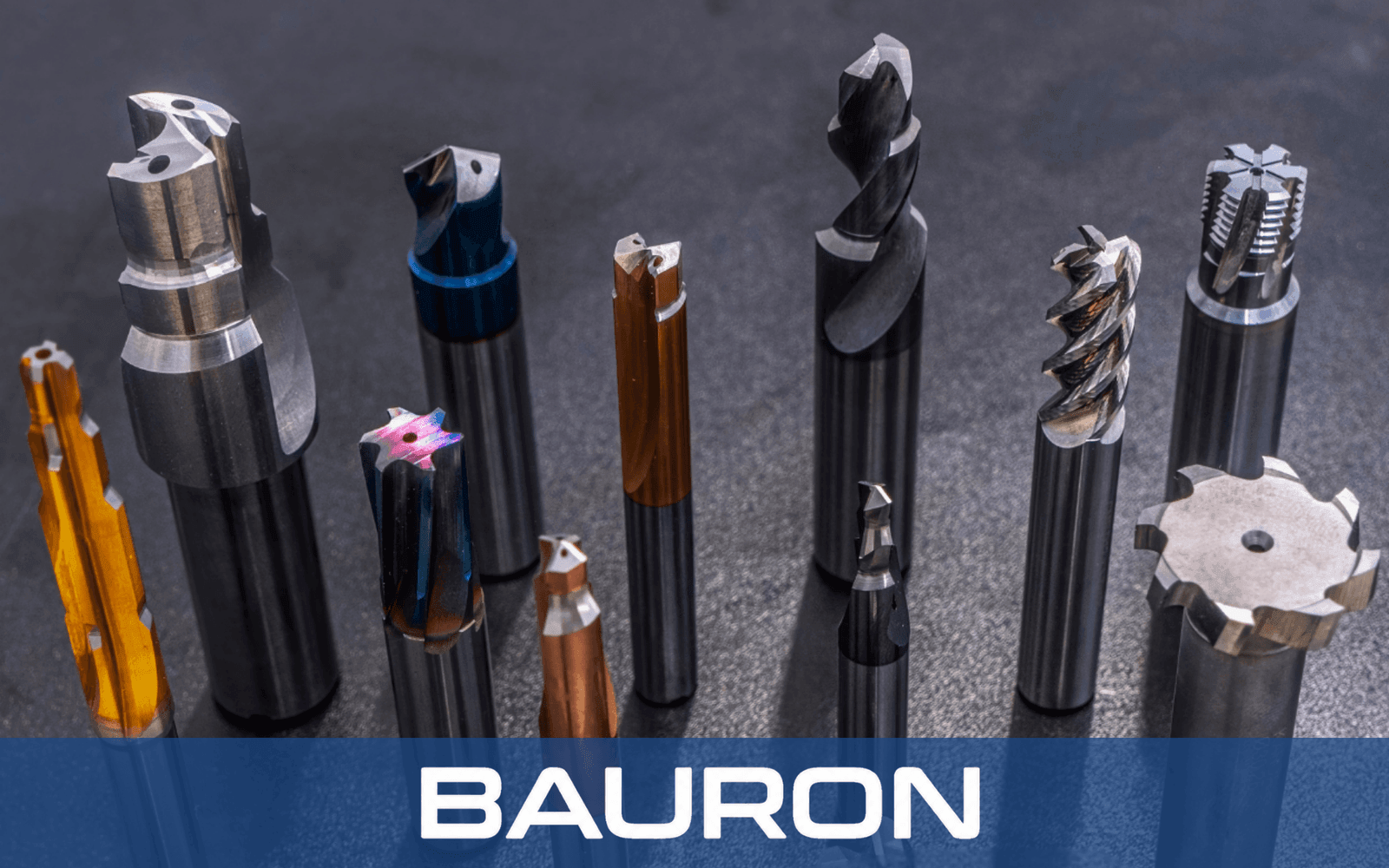
Spiral point taps push chips forward, ahead of the tap, which makes them the standard choice for through holes. Spiral flute taps pull chips back up and out of the hole, which makes them the standard choice for blind holes. That single difference in chip direction drives most tap selection decisions on the shop floor.
Choosing the wrong one is a common cause of broken taps, rough threads and scrapped parts. This guide explains how each tap works, where each performs best, and how material and coating choices affect tool life.
What are spiral point taps and how do they work?
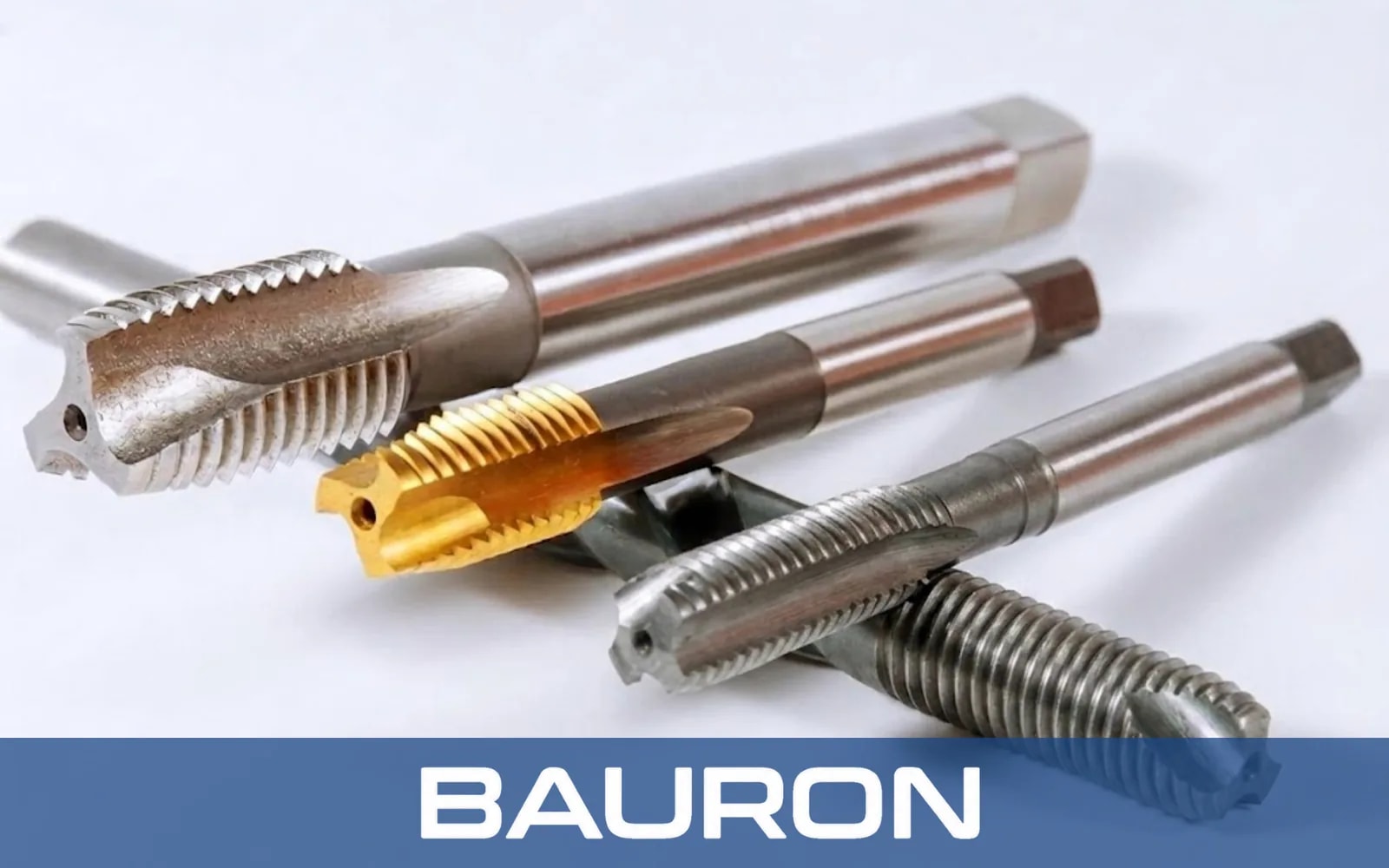
Spiral point taps, also called gun taps, have straight flutes with an angled grind on the cutting face at the front of the tap. This angled "point" shears the chip and drives it forward, out the bottom of the hole.
Because chips never travel back through the cut threads, spiral point taps produce clean threads and rarely jam on chip packing. Their flutes are also shallower than those of hand taps or spiral flute taps, leaving a thicker core. That extra cross-section gives more torsional strength, so they generally tolerate higher tapping speeds.
What are spiral flute taps and how do they work?
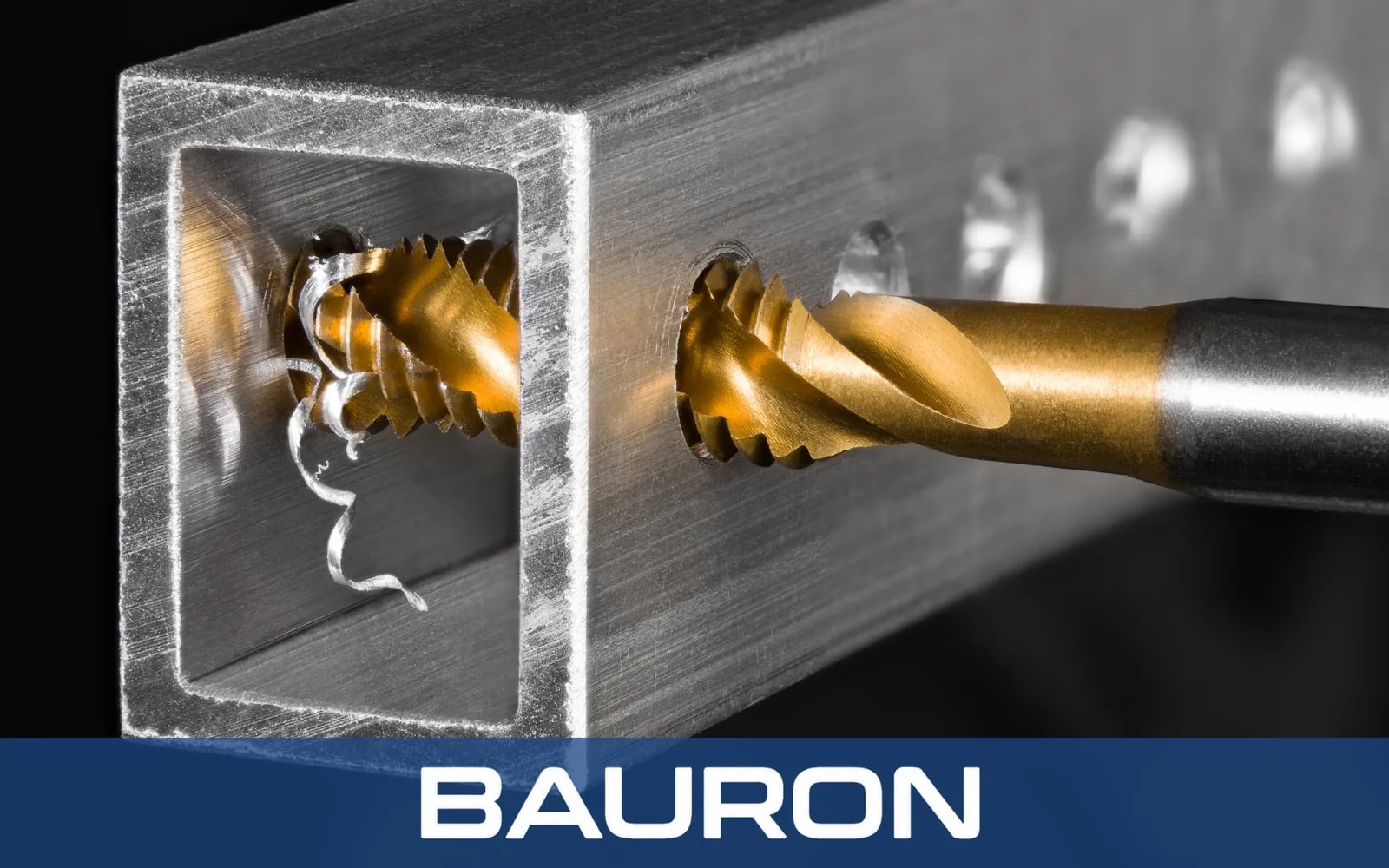
Spiral flute taps have helical flutes, like a twist drill. For right-hand threads, a right-hand helix lifts chips upward and out of the hole as the tap advances.
Helix angle matters:
- Low helix (about 15°): Stronger cutting edges for harder or tougher materials such as alloy and stainless steels.
- High helix (about 40–45°): Faster chip evacuation for soft, stringy materials such as aluminum, copper and some plastics.
Spiral flute taps usually have a short bottoming or semi-bottoming chamfer (roughly 1.5–3 threads), so they can thread close to the bottom of a blind hole.
Why not use spiral flute taps everywhere?
Their deeper flutes leave a thinner core, which lowers torque capacity. In through holes, the upward-moving chips can also wrap around the tap and scratch finished threads on reversal.
What are the key differences between spiral point and spiral flute taps?
| Feature | Spiral point tap | Spiral flute tap |
|---|---|---|
| Flute form | Straight, with angled point grind | Helical (typically 15°–45°) |
| Chip direction | Forward, ahead of the tap | Backward, out of the hole |
| Ideal hole type | Through holes | Blind holes |
| Typical chamfer | Plug (about 3–5 threads) | Bottoming or semi-bottoming (about 1.5–3 threads) |
| Core strength | Higher | Lower |
| Speed capability | Generally higher | Moderate |
| Main risk | Chips packing at the bottom of blind holes | Chip wrapping in through holes; breakage under high torque |
If the hole goes all the way through, start with a spiral point tap. If it stops inside the part, start with a spiral flute tap. Bauron's taps design guide explains chamfer lengths and flute forms in more detail.
Which tap materials and coatings give the best wear resistance?
Tap substrate decides toughness and heat resistance. Coating decides friction, chip flow and how long the cutting edge stays sharp.
| Tap material | Strengths | Typical use |
|---|---|---|
| HSS (M2) | Tough, low cost, forgiving | General-purpose steel, aluminum, maintenance work |
| HSS-E / cobalt (M35, M42) | Better hot hardness and abrasion resistance | Stainless steel, alloy steel, higher volumes |
| Powder-metallurgy HSS | Fine, uniform structure; resists chipping and wear | CNC production, tougher alloys |
| Solid carbide | Very high hardness and wear resistance; brittle | Cast iron, hardened steel, rigid CNC setups |
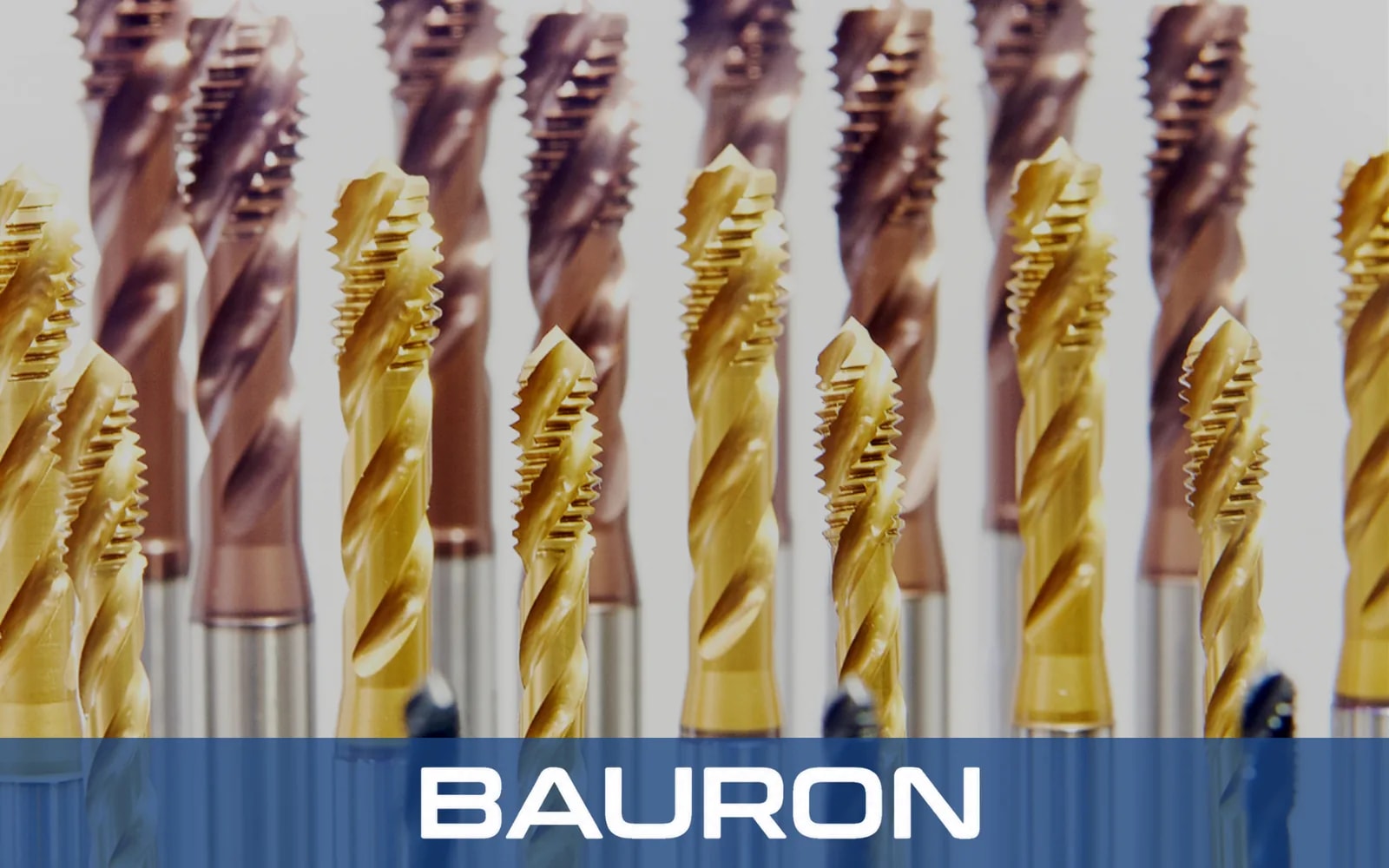
Most taps also have a thin surface coating. A good coating helps the tap cut more smoothly, stay sharp longer and stop metal from sticking to it. For steel and stainless steel, choose a hard coating that handles heat well. For aluminum, copper and plastics, choose a smooth, polished tap that does not let soft material build up on the cutting edges. Our guide to end mill coatings compares the same coating families on milling tools.
Very hard taps last longest on modern, steady CNC machines. On older machines or when tapping by hand, a tougher cobalt tap usually lasts longer because it is less likely to chip or snap.
Where are spiral point taps and spiral flute taps used in industry?
| Application | Hole type | Recommended tap |
|---|---|---|
| M8 × 1.25 holes through a 304 stainless steel bracket | Through | Spiral point, cobalt HSS with TiCN |
| M6 blind holes in a 6061 aluminum hydraulic manifold | Blind | High-helix spiral flute, bright or CrN |
| 1/2-13 threads in steel mounting plates for structural fabrication | Through | Spiral point, HSS with steam oxide |
| Blind holes in a 4140 steel gearbox housing | Blind | Low-helix spiral flute, TiAlN |
| Gray cast iron pump bodies | Through or blind | Straight flute or spiral point; cast iron makes powdery chips that do not need helical evacuation |
How does spiral drilling affect tapping results?
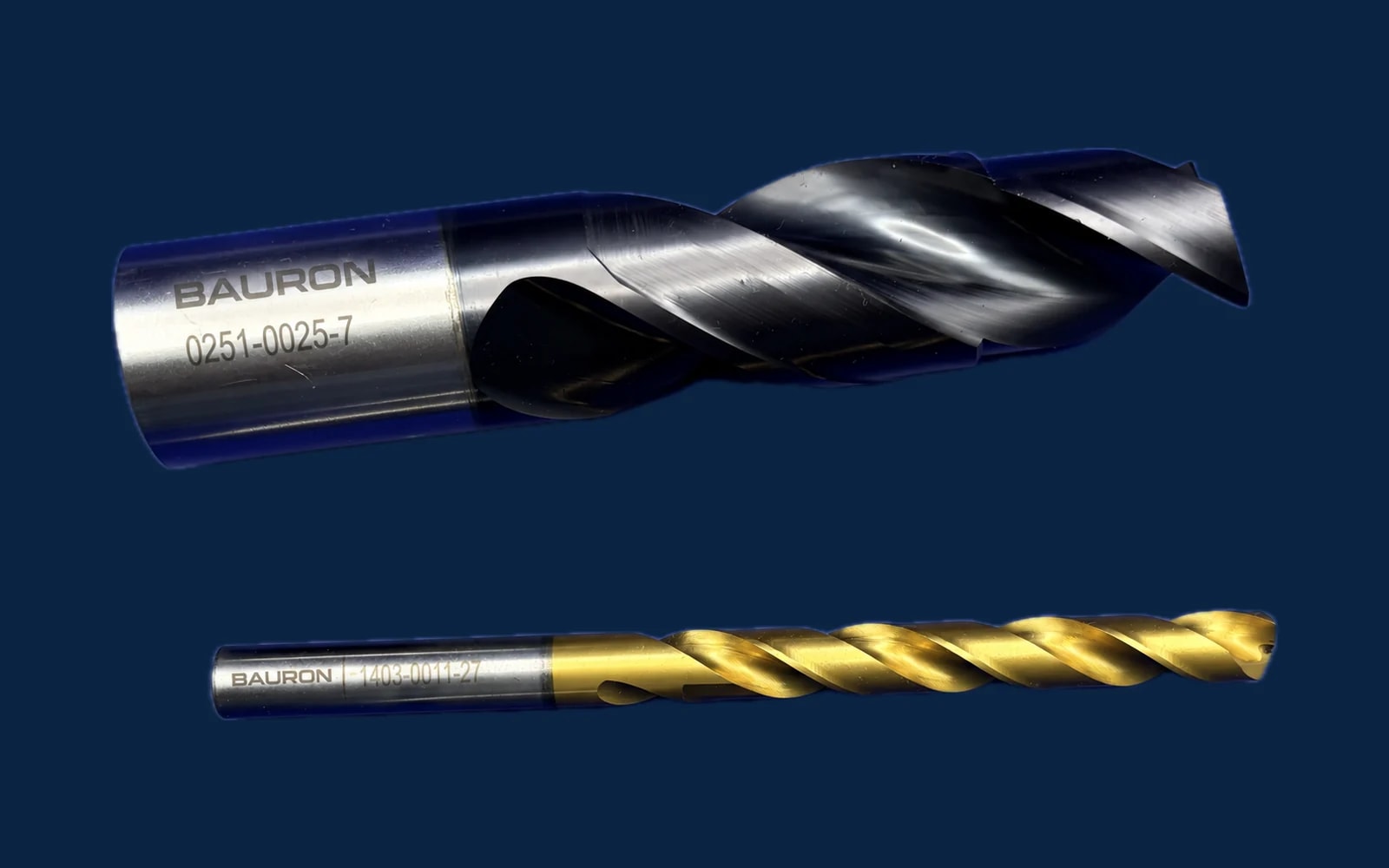
Thread quality starts with the drilled hole. In a spiral drilling and tapping sequence, the twist drill sets the minor diameter, straightness and surface condition the tap works with. Use the correct tap drill (6.8 mm for M8 × 1.25, #7 for 1/4-20 UNC) and keep the drill sharp, because a work-hardened hole wall in stainless steel shortens tap life quickly.
For blind holes tapped with spiral point taps, drill deep enough to leave chip space below the last full thread.
Is a spiral point tap set worth buying?
A spiral point tap set covering common sizes (for example M3–M12, or #4–1/2" UNC) suits maintenance shops and fabricators that thread mostly through holes. Production lines usually buy individual taps matched to one material and machine. Suppliers such as Bauron can help when a job needs a non-standard geometry, chamfer or coating that catalog sets do not cover.
What are the most common tapping problems and how do you fix them?
| Problem | Likely cause | Solution |
|---|---|---|
| Tap breaks at the bottom of a blind hole | Spiral point tap packing chips; drill depth too shallow | Switch to a spiral flute tap or drill deeper |
| Chips wrap around the tap in through holes | Spiral flute tap pulling long chips upward | Use a spiral point tap |
| Oversize or torn threads in aluminum | Built-up edge, poor lubrication | Use a bright or CrN-coated high-helix tap and a suitable cutting fluid |
| Rapid wear in stainless steel | Heat, work hardening, wrong substrate | Use cobalt HSS with TiCN, reduce speed, and apply coolant at the cut |
| Bell-mouthed or tapered threads | Misalignment between spindle and hole | Use rigid (synchronized) tapping or a floating tap holder |
| Chipped teeth on carbide taps | Vibration or spindle runout | Improve rigidity or switch to PM-HSS |
Most tap failures trace back to three causes: the wrong flute type for the hole, an incorrect drilled hole, or poor lubrication.
Which tap should you choose?
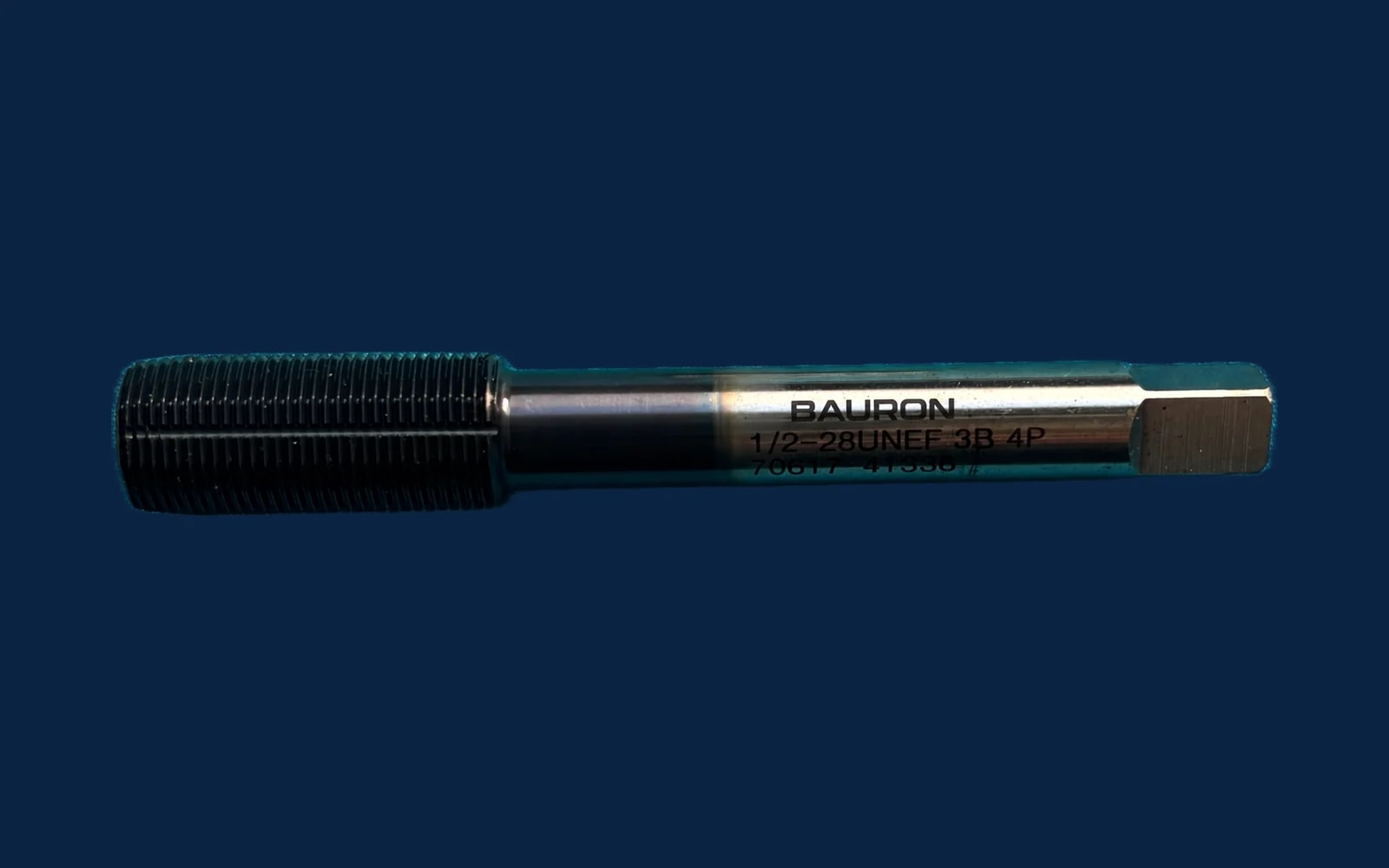
Choose by where the chips should go. Spiral point taps push chips ahead of the tap, so they suit through holes and run faster thanks to their stronger core. Spiral flute taps pull chips out of the hole, so they suit blind holes, with the helix angle matched to the workpiece material.
After that, match the tap material and coating to the workpiece and machine, and start with a correctly sized, cleanly drilled hole. Getting these three choices right prevents most broken taps and rejected threads. For unusual materials, thread forms or production volumes, a tooling specialist such as Bauron can recommend or make a tap built for the job: browse our threading taps, start a custom tool design or request a quote.