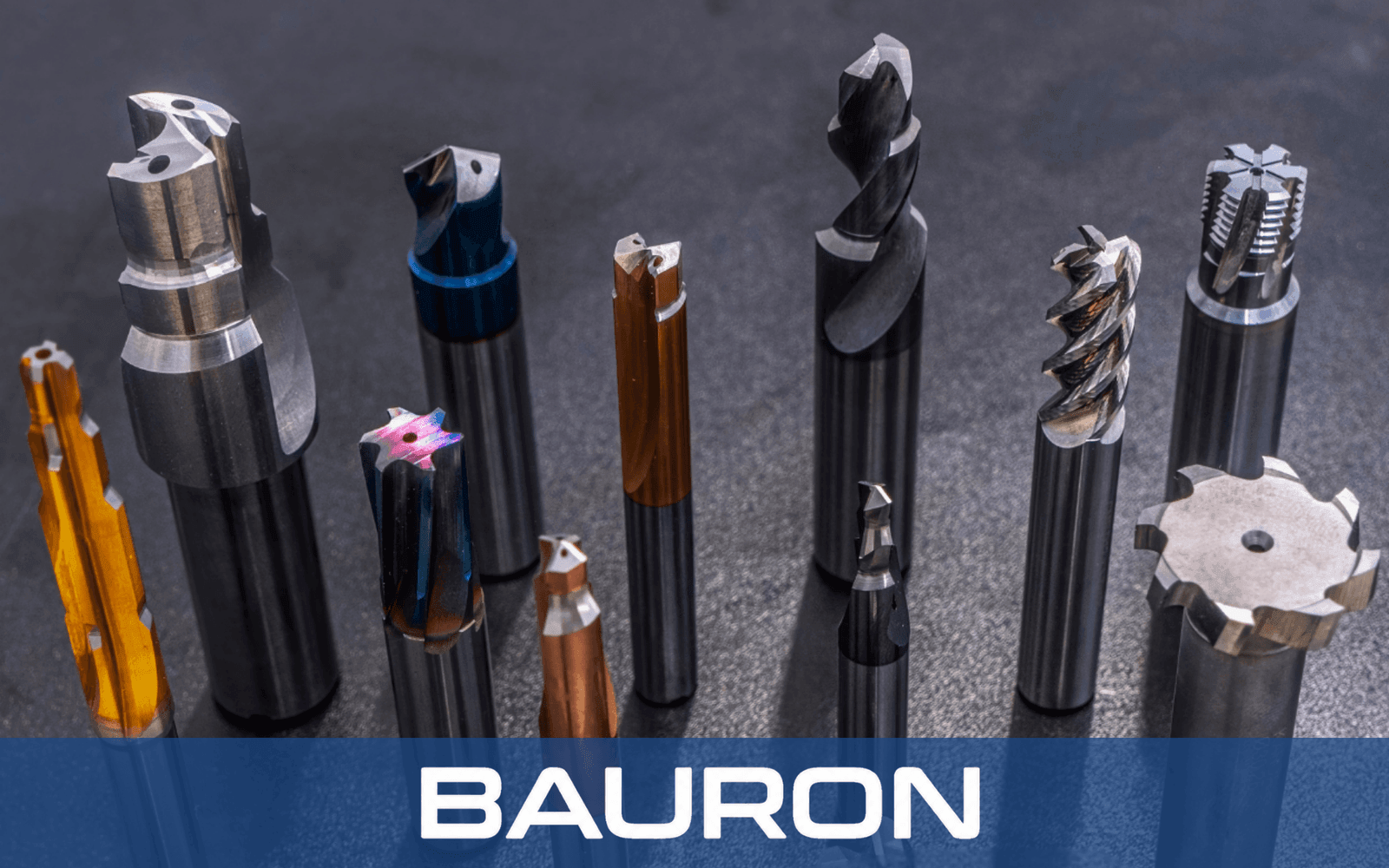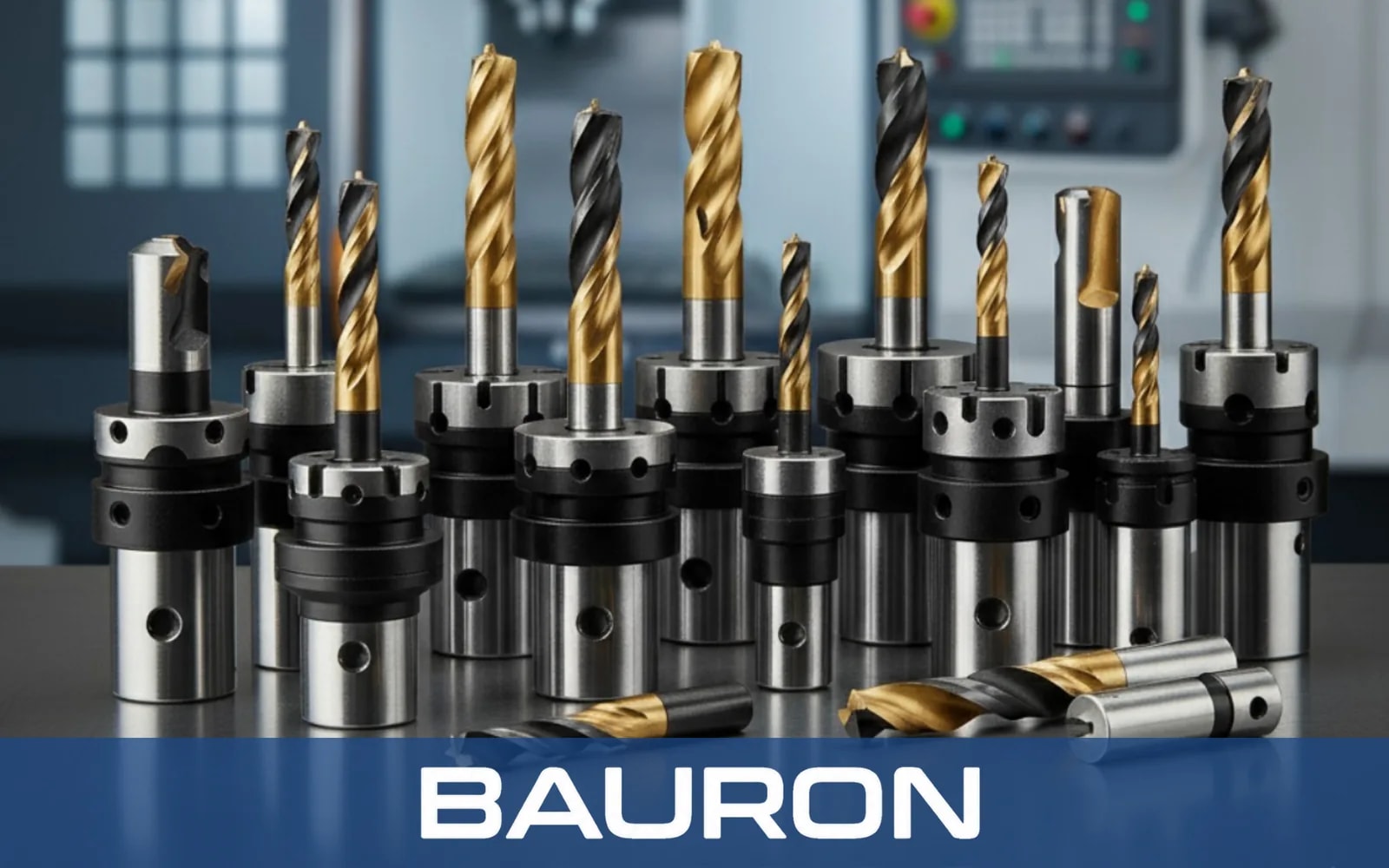
Everything about a CNC machine comes down to the quality of the tool being used. However good the machining center is, a tool that is wrong for the job or not used properly will chatter, leave a poor edge or cut an oversized hole. As a result, the technology and processes involved in creating cutting tools are a very fast-growing segment of the manufacturing world.
CNC cutting tools such as end mills, taps, reamers and drills remove material under the control of digital computer programs. Turning a material like metal into a usable part has come a long way thanks to many improvements in technology, from tool materials and designs to the coatings applied to ground tools.
Keeping up to date on these advancements has become a requirement for those in the machining industry, including engineers, buyers, and machine shop owners. The correct precision cutting tools will lead to more profit with faster cycles and longer tool life. Poor choices lead to slowly disappearing margins with each job.
In this article, we go through the latest trends in CNC machining tooling. This includes advanced materials and coatings, the primary tool types, industry standard CNC tooling, designing your own custom tools, and how tool choices differ in both high volume and low volume production.
Advances in Tool Materials and Coatings
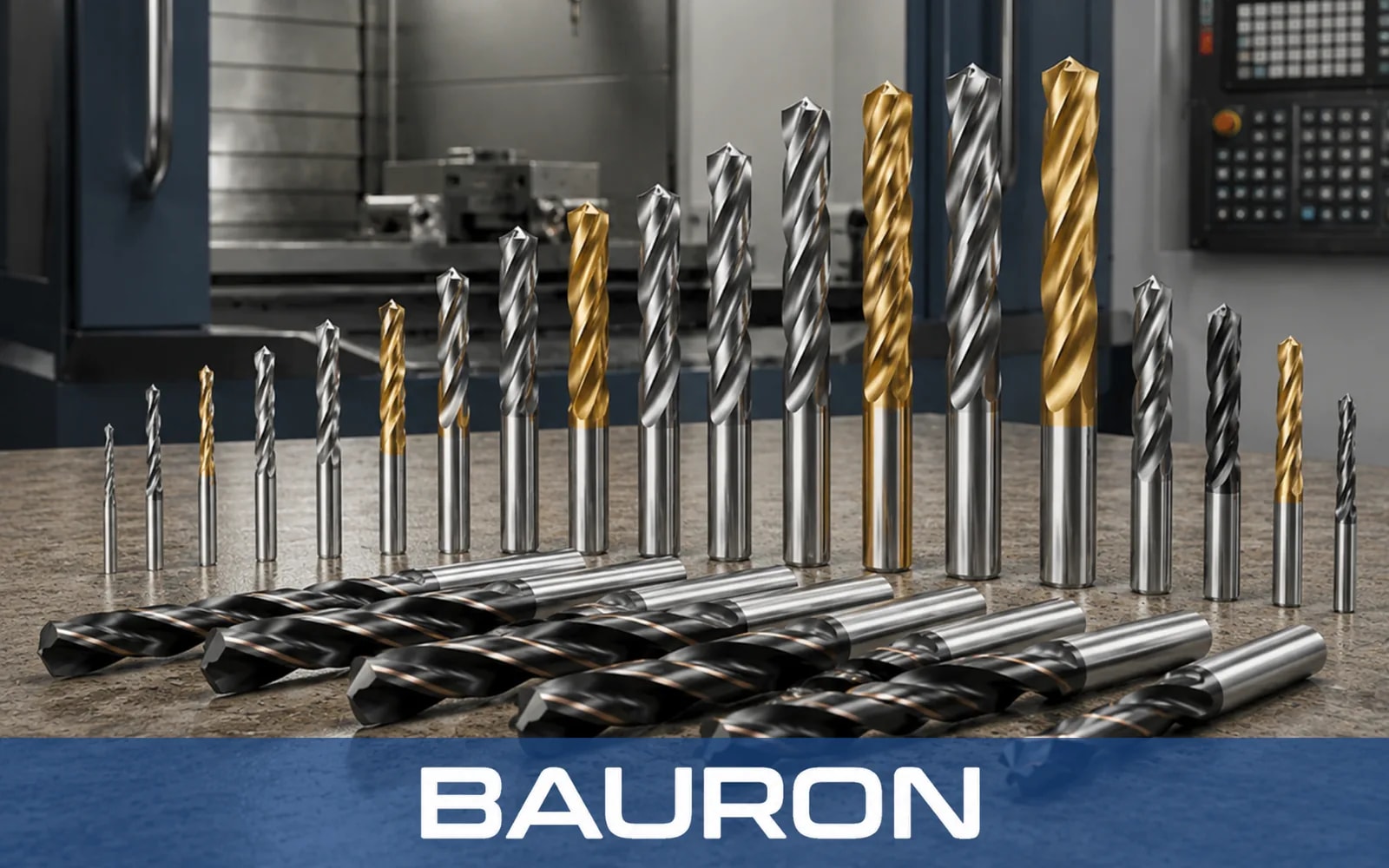
The biggest gains in CNC cutting tools start with what the tool is made of. Substrate and coating together decide how fast a tool can run, how much heat it can take and how long it lasts.
Solid carbide
Solid carbide is now the default substrate for high-performance precision cutting tools. It is far harder and stiffer than high-speed steel, so it holds a sharp edge at higher cutting speeds and deflects less under load. Lower deflection means truer holes, flatter floors and tighter tolerances.
Modern fine-grain and sub-micron carbide grades add toughness to that hardness. This lets carbide survive interrupted cuts and hard materials that once chipped earlier grades.
HSS-Co (cobalt high-speed steel)
Cobalt high-speed steel still earns its place. It is tougher than carbide and more forgiving on less rigid machines, manual setups and older equipment. It is also more economical for many drilling and tapping jobs.
For taps and long drills in particular, HSS-Co remains a strong choice where breakage risk matters more than maximum speed.
Coatings
Coatings are where much of the recent progress has happened. Thin PVD layers such as titanium nitride (TiN), titanium aluminum nitride (TiAlN) and aluminum chromium nitride (AlCrN) raise surface hardness and reduce friction. Aluminum-rich coatings form a protective oxide layer at high temperature, which is why they suit dry and high-speed machining of steels.
For aluminum and non-ferrous metals, the priority shifts from heat resistance to preventing built-up edge. Polished, uncoated or diamond-like carbon (DLC) surfaces help chips slide off cleanly. Our guide to end mill coatings compares the options in more detail.
The practical lesson is simple: there is no single best coating. The best CNC machining tools match substrate and coating to the workpiece material and the machining strategy.
The Four Core Families of CNC Cutting Tools
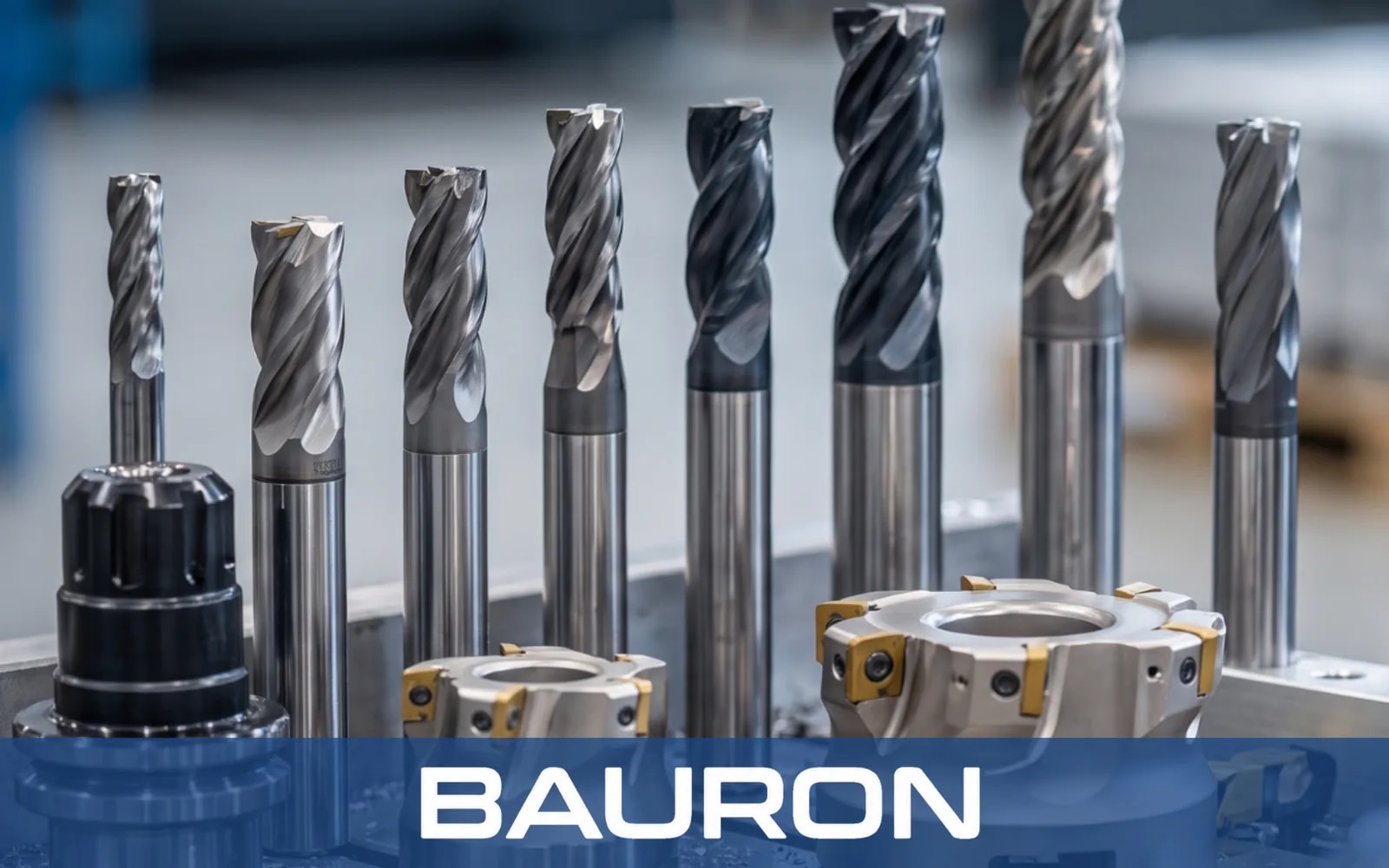
Most CNC machining comes down to three jobs: making holes, removing material and cutting threads. Four tool families cover them.
Drills: faster, deeper hole-making
Drilling is often the most frequent operation on a part, so small gains add up fast. Modern drill ranges go well beyond the twist drill. They include spot and center drills, step drills, micro drills, counterbore drills, deep-hole drills and gun drills.
The standout advance is through-coolant design. Coolant delivered through the drill body flushes chips from the bottom of the hole and cools the cutting edge. Bauron's solid carbide and HSS-Co range covers more than 25 drill types, with through-coolant designs supporting deep-hole drilling from 8xD to 30xD.
End mills: more geometry for every material
End mills shape profiles, pockets, slots and 3D surfaces. Today's range includes square, ball nose, corner radius, chipbreaker, tapered ball nose and form end mills, plus dovetail, keyseat and chamfer cutters.
Flute count is one of the most important choices. Two- and three-flute designs leave larger chip gullets, which suits aluminum and non-ferrous metals. Higher flute counts, up to 12, add strength and finish for hardened and pre-hardened steels. Chipbreaker geometries split long chips so roughing passes can run harder.
Reamers: bores that fit the first time
When a drilled hole is not accurate enough, a reamer finishes it to size. Machine and chucking reamers, straight and spiral flute designs, and piloted, step, shell, tapered and adjustable reamers each solve a different bore problem.
For precision fits such as dowel pins and bearing seats, H7 bore accuracy is the common target. Bauron reamers in HSS, HSS-Co and solid carbide are capable of H7, with custom diameters and tolerance classes on request.
Taps: reliable precision threading
A broken tap can scrap a nearly finished part, so tap design matters. Spiral point taps push chips forward in through holes. Spiral flute taps pull chips back out of blind holes. Thread forming taps displace material instead of cutting it, which creates stronger threads with no chips at all.
Standard metric (M), UNC and UNF threads cover most work. Aerospace, energy and fluid-handling parts often need Metric Fine, UNJ, Acme or NPT threads, which is where custom taps come in.
Need help choosing the right tool? Talk to a Bauron engineer or design your own tool.
Precision CNC Tooling: Tighter Tolerances, Better Parts
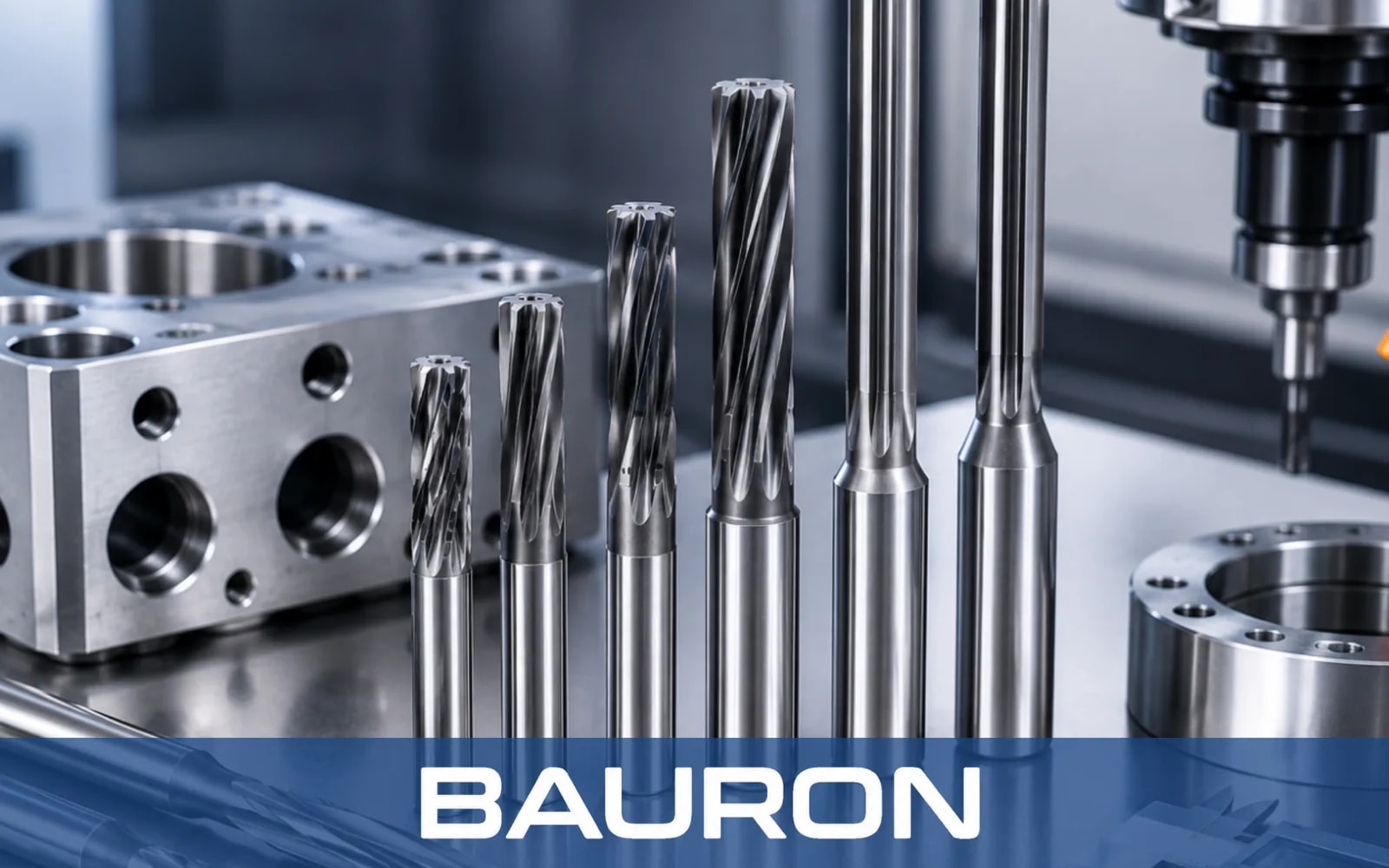
Precision in a finished part starts with precision in the tool. Runout, diameter error or an inconsistent edge on the tool is copied straight into every part it cuts.
5-axis CNC grinding
Modern tool grinders work on five axes under CNC control. They can produce complex flute forms, variable helix angles and multi-step profiles with repeatable accuracy. This is what makes form tools and step tools practical at reasonable cost.
With 5-axis grinding and careful process control, Bauron holds tolerances down to ±0.0025 mm (±0.0001 in, or 2.5 microns) on selected critical tool features.
Inspection and metrology
A tolerance only means something if it is measured. Precision CNC tooling should be verified with coordinate measuring machines (CMM) and optical comparators, which check diameters, profiles and edge geometry against the design.
Certified quality systems add a second layer of confidence. Bauron production is ISO 9001:2015 certified, so inspection and traceability follow a documented, audited process.
Why it matters on the shop floor
Tighter tool tolerances pay off in ways buyers can measure. Parts pass inspection the first time. Tools wear evenly, so tool life is more predictable. And when a tool is replaced, the new one cuts the same as the last, which means less re-measuring and fewer offset changes between batches.
Custom Tool Design Goes Digital
For years, ordering a special cutting tool meant sketches, emails and weeks of back-and-forth. That is changing fast. Online configurators now let engineers specify custom CNC cutting tools in minutes.
Bauron's Custom Tool Design platform is a good example. Customers configure end mills, drills, taps and reamers through visual online forms, choosing parameters such as diameter, length, flute design, coolant options, thread type, pitch, tolerance and coating. Every submission is then reviewed by a Bauron engineer before production.
That engineer review is the important part. A configurator makes tooling accessible, but an experienced engineer catches problems a form cannot. Examples include a flute length that will chatter, or a coating that does not suit the workpiece material.
Custom tools are worth considering when:
- One tool could replace two or three operations, such as a step drill that drills and chamfers in one pass.
- A part needs a non-standard diameter, thread or profile.
- Standard tools wear out too fast in a difficult material.
- Deep or hard-to-reach features need special lengths or reach.
Combining operations in one custom tool cuts tool changes and cycle time. On a production job, those seconds per part quickly become hours per week.
From Low Volume Manufacturing to High Volume Manufacturing
The best tooling strategy depends on how many parts you are making. The same CNC machining tools can be the right answer for a prototype and the wrong answer for a production run.
| Low volume manufacturing | High volume manufacturing | |
|---|---|---|
| Typical work | Prototypes, pilot runs, single-tool orders | Recurring production, thousands of parts |
| Tooling priority | Flexibility and fast lead time | Cost per part and tool life |
| Tool choice | Versatile standard tools, small custom batches | Optimized custom tools, combined operations |
| What to watch | Setup time and getting the first part right | Consistency between tool batches |
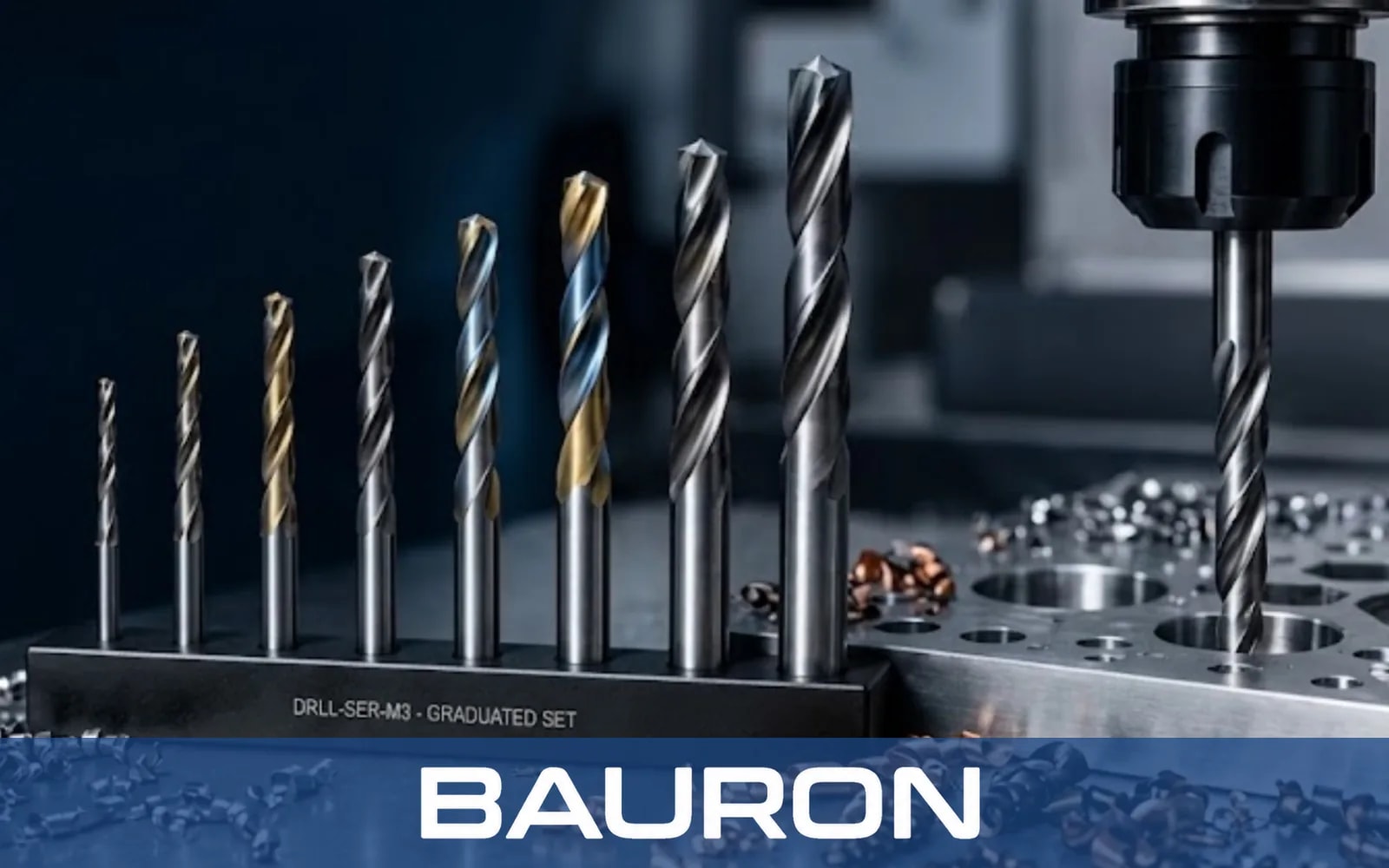
Low volume manufacturing
In prototyping and short runs, speed and flexibility matter most. Engineers need tools quickly, often in small quantities, and designs may still change. Versatile standard tools cover most features, and small batches of custom tools fill the gaps.
The ability to order a single custom tool, rather than a minimum batch, makes low volume work far more practical.
High volume manufacturing
At production scale, every second of cycle time and every tool change is multiplied by thousands. Here, custom tools that combine operations, coatings tuned for the material and predictable tool life deliver real savings.
Consistency becomes critical too. Each reorder of a tool should cut exactly like the last, so processes stay stable without re-qualification.
One partner across the lifecycle
The smoothest path is a supplier that can support both ends. Bauron draws on Norck's capabilities as a precision parts manufacturer, offering on-demand production from low volume prototypes and single tools through to high volume recurring orders. A tool proven on the prototype can scale straight into production.
Get a quote for your next tooling order.
Sustainability, Future Prospects and Challenges
Sustainability
Cutting tools use valuable raw materials, and making them takes a lot of energy. The simplest way to reduce that impact is to make tools that last longer, so fewer need to be made, shipped and thrown away.
Worn tools can often be sharpened and refreshed instead of replaced, and old tools can be recycled. Tools that send coolant straight to the cutting edge also help a shop use less of it.
Challenges
The industry still faces a few big hurdles:
- Tougher materials: Parts for aircraft and other demanding industries use very hard metals that wear tools out quickly.
- Smaller parts: Medical and electronics parts need tiny tools that break easily and are hard to check.
- Fewer experts: Picking the right tool for a job still depends on experienced engineers, and there are not enough of them.
- Supply and price: The cost and delivery time of raw materials can change quickly.
What comes next
The next big step will come from smarter machines. Machines can now sense when a tool is wearing out and swap it before it breaks. Programmers can also test a job on screen with an exact digital copy of the tool before cutting real metal.
Online design tools will also make custom tools easier to order. With an engineer checking every design, a tool made for one specific job is becoming as easy to buy as a standard one.
Conclusion
CNC cutting tools have changed more in the last few years than many shops realize. Better carbide grades and coatings, 5-axis grinding, micron-level inspection and online custom design all mean faster cycles, longer tool life and more accurate parts.
Whether you are proving out a prototype or running thousands of parts a month, the right precision CNC tooling makes the difference. Partnering with an experienced precision parts manufacturer lets you move from low volume to high volume manufacturing with the same trusted tools.
Ready to upgrade your tooling? Design your custom CNC cutting tool with Bauron, or contact our engineers for help choosing the right tool.