Deep Cavity Access
The undercut neck clears steep pocket walls and deep rib channels. Curved intake and exhaust passages in cylinder heads are handled by dedicated porting tools.
Rotate the model with a mouse or one finger. Use the mouse wheel or a two-finger gesture for controlled zoom.
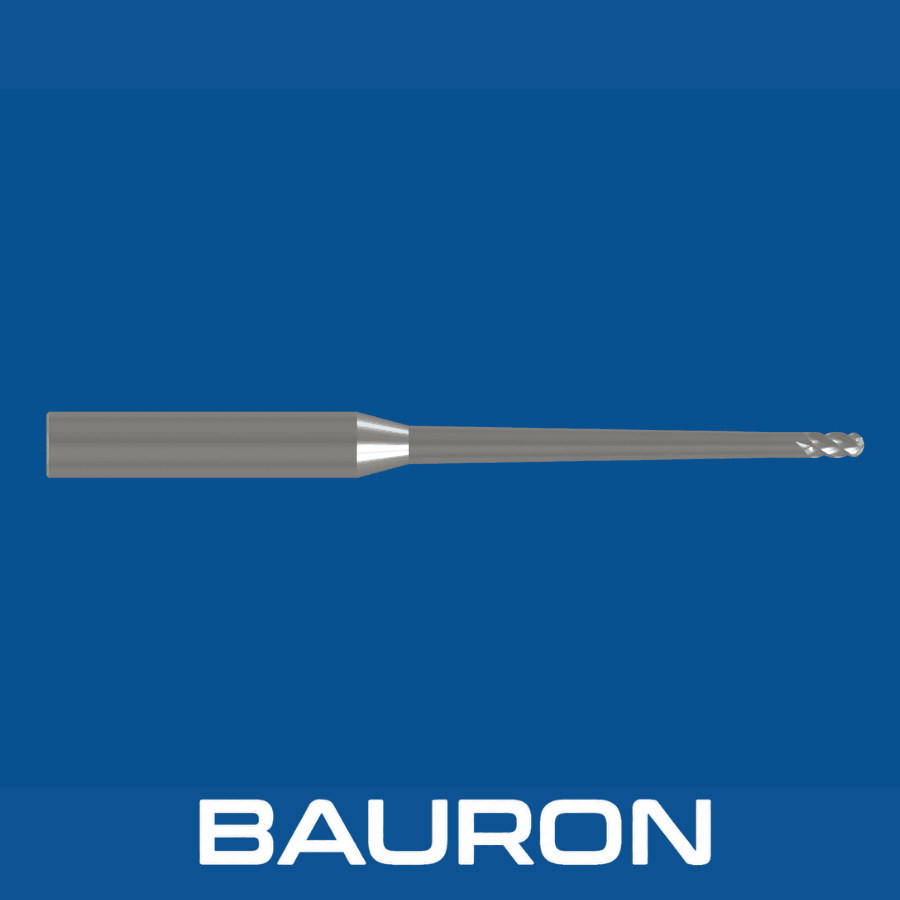
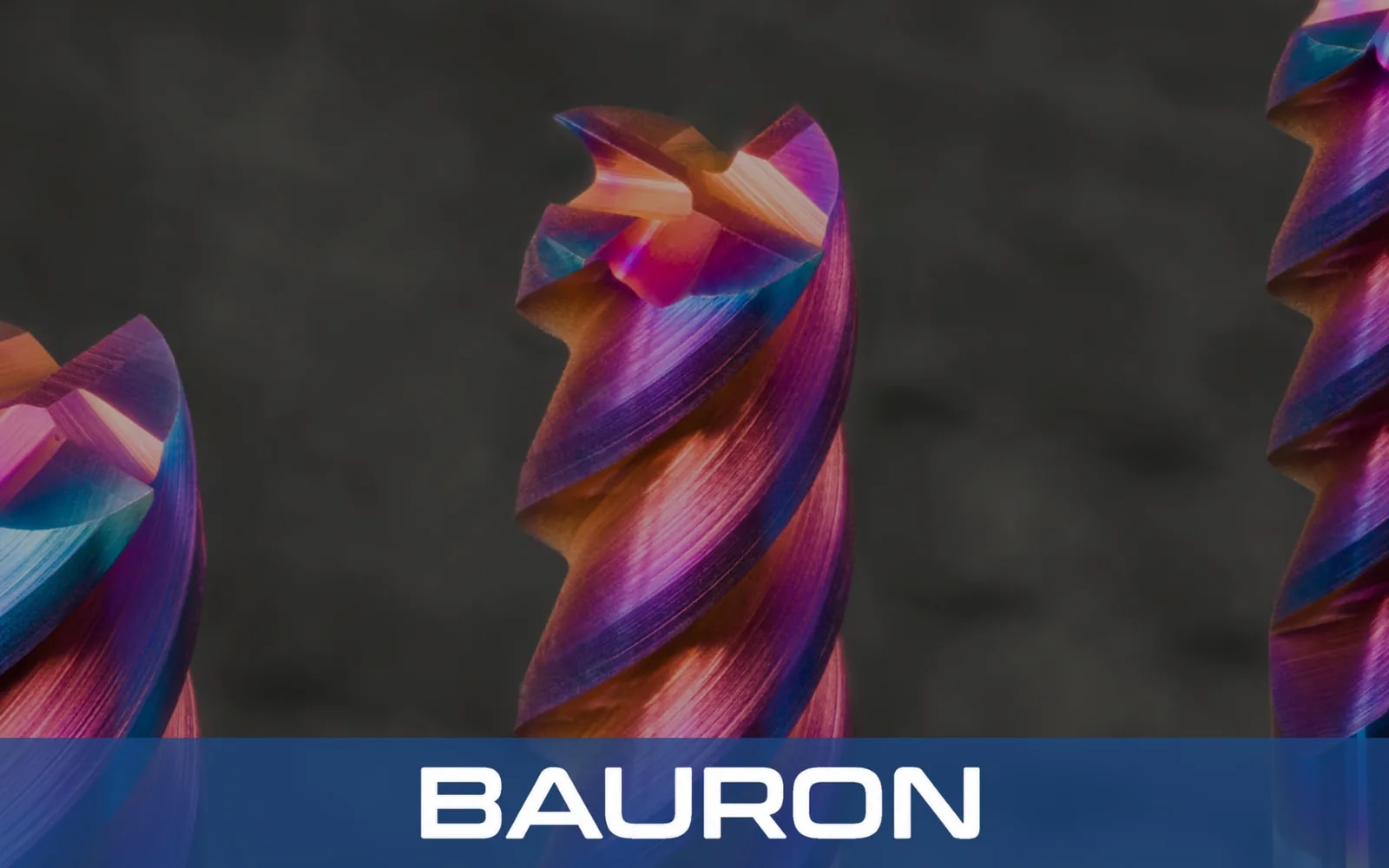
Each clearance ball end mill is a precision milling cutter with a reduced neck behind a hemispherical cutting tip. The smaller neck diameter provides clearance in deep pockets and steep 3D molds so the shank does not rub against nearby sidewalls. Where reach is short, standard ball nose end mills offer the same tip profile on a full-diameter body.
The undercut neck clears steep pocket walls and deep rib channels. Curved intake and exhaust passages in cylinder heads are handled by dedicated porting tools.
The spherical radius maintains tangential contact with 3D CAD surface geometry.
Neck-to-diameter ratios balance reach with core strength to limit chatter during deep-reach passes.
The extended geometry keeps the toolholder above the workpiece while the cutting end reaches deep features.
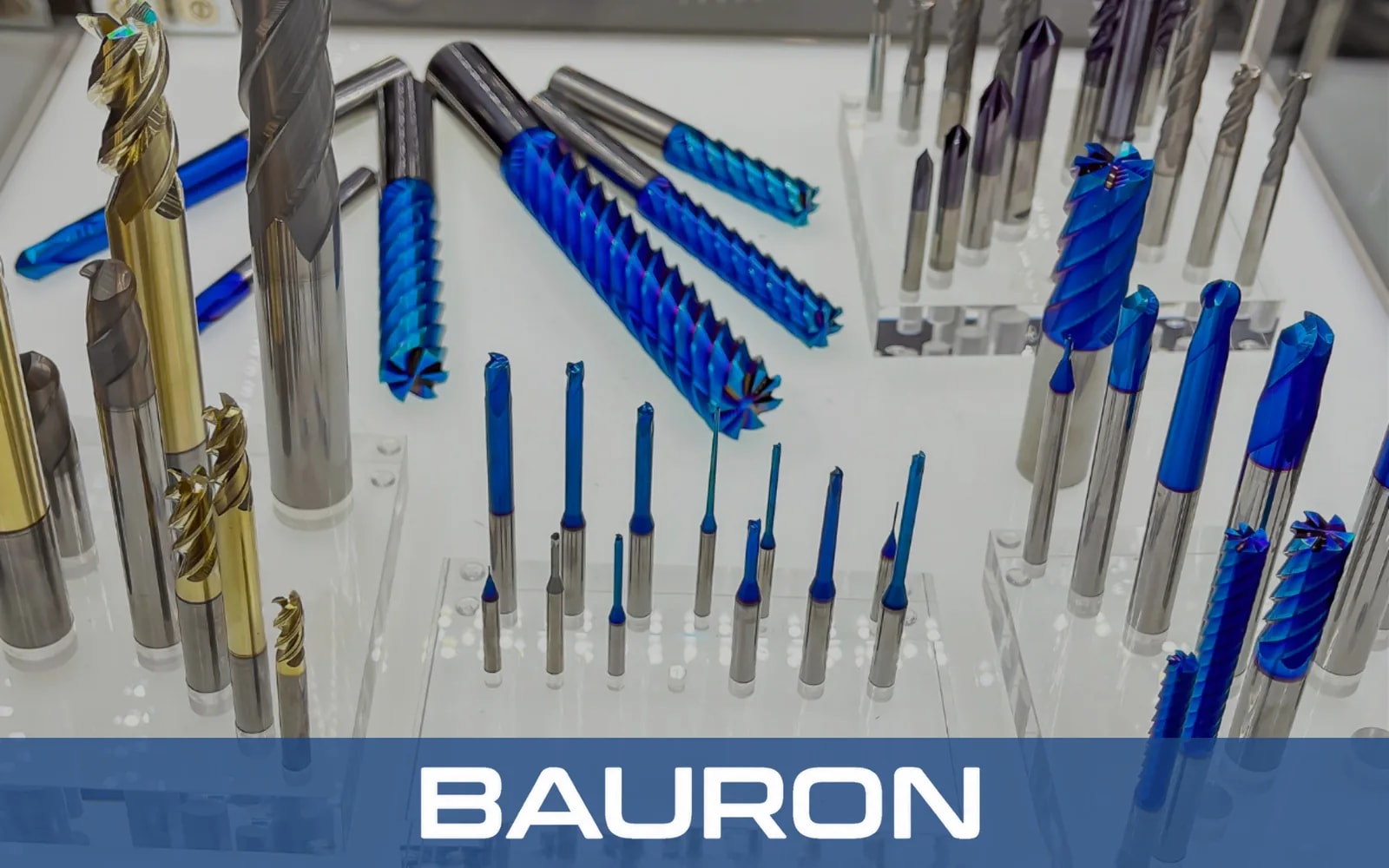
Reduced-neck geometry limits the shoulder rubbing and workpiece marking that full-shank end mill tools can cause inside deep pockets.
Core tapers on this carbide ball end mill are designed to reduce deflection during extended-reach 3D finishing.
The spherical profile supports smooth finishes and can reduce post-machining polishing.
Available with clearance necks up to 10 to 15 times the tool diameter.
Supports 3-axis, 4-axis, and continuous 5-axis toolpaths.
| Specification | Range / Details |
|---|---|
| Diameter Range | 1/32" to 3/4"; metric 0.8 mm to 20 mm available |
| Reach Lengths | 3x, 5x, 8x, 10x, and 15x diameter clearance necks |
| Radius Tolerance | ±0.0002" or ±0.005 mm |
| Flute Count | 2 flutes for non-ferrous materials; 4 flutes for hardened steels and titanium |
| Neck Style | Tapered core or straight clearance neck |
| Operation Type | Deep-reach 3D surface finishing and mold-cavity sculpting |
| Material / Coating | Best For | Key Advantage |
|---|---|---|
| Micro-Grain Solid Carbide | Hardened mold steels, stainless steel, and titanium. | Core stiffness helps limit chatter and deflection during long-reach passes. |
| nACo / AlTiN Coating | Hardened steels up to 65 HRC and dry milling. | Thermal hardness protects the spherical tip during high-friction cutting. |
| DLC / ZrN Coating | Aluminum, copper, and non-ferrous composites. | Lower friction helps prevent material welding in deep pockets. |
Micro-grain carbide provides stiffness at long reach, nACo or AlTiN supports hardened steels and dry cutting, and DLC or ZrN helps manage adhesion in non-ferrous materials.
Maintain tool-vector engagement inside complex 3D mold cavities.
Run 3D finishing passes in deep die-sinking applications while maintaining toolholder clearance. Draft-angled walls can be cut first with tapered die sinking cutters.
Use live tooling for deep radial contours on small turned components.
Sculpts deep cavities, core pins, and steep parting lines in injection molds.
Reaches between closely spaced blades on impellers and blisks.
Machines deep contoured joint sockets and orthotic hardware.
Finishes internal floor radii and tall ribs on structural airframe components, a core task in aerospace tooling & machining.
The reduced neck behind the cutting edge lets the tool enter deep, narrow cavities without the full-diameter shank rubbing or colliding with the sidewall.
Choose the shortest neck that clears the deepest workpiece feature. Extra neck length increases overhang and leverage, which can introduce chatter and deflection.
Use lighter radial depth of cut, maintain suitable surface speed, evacuate chips with high-pressure coolant or air, and use tool tilt where available so cutting occurs away from the dead center of the ball.
A straight neck keeps a uniform reduced diameter for maximum sidewall clearance. A tapered neck thickens toward the shank for greater rigidity when pocket-wall draft permits.
Bauron can engineer custom reach lengths, neck tapers, ball-radius tolerances, and application-specific coatings from 3D CAD models.
The engineering team at Bauron Tools supports custom reach lengths, neck tapers, ball-radius tolerances, and application-specific coatings. Share 3D models and machining requirements for technical review.
Talk to Engineering