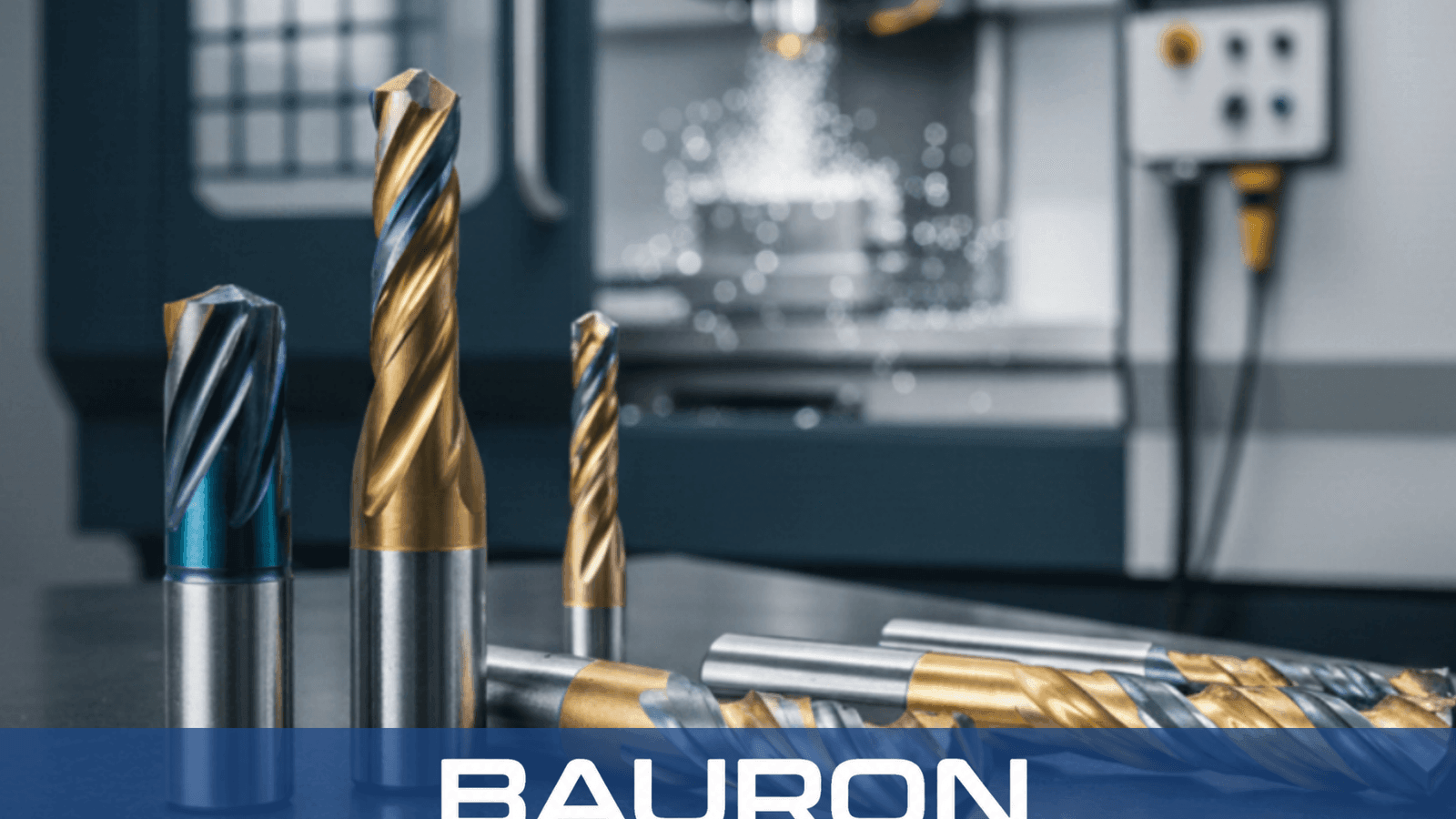
90-Degree Shoulders
Sharp cutting corners machine right-angle walls and shoulders. Walls that need a draft angle call for carbide tapered end mills instead.
Rotate the model with a mouse or one finger. Use the mouse wheel or a two-finger gesture for controlled zoom.
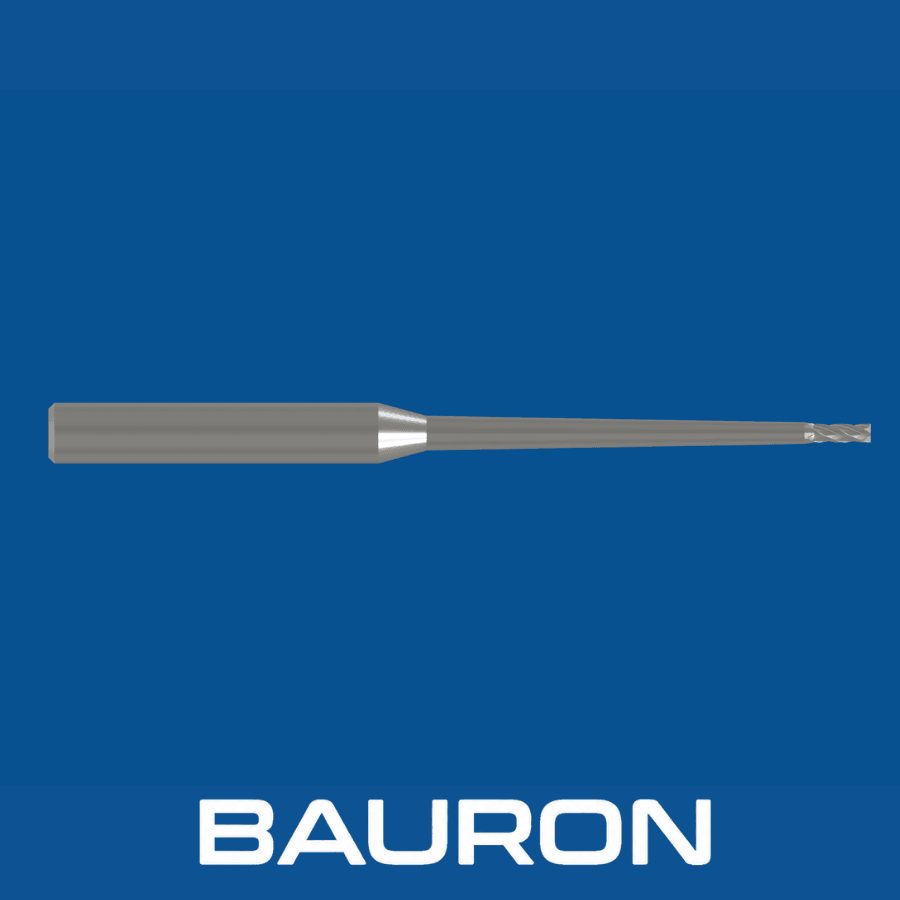
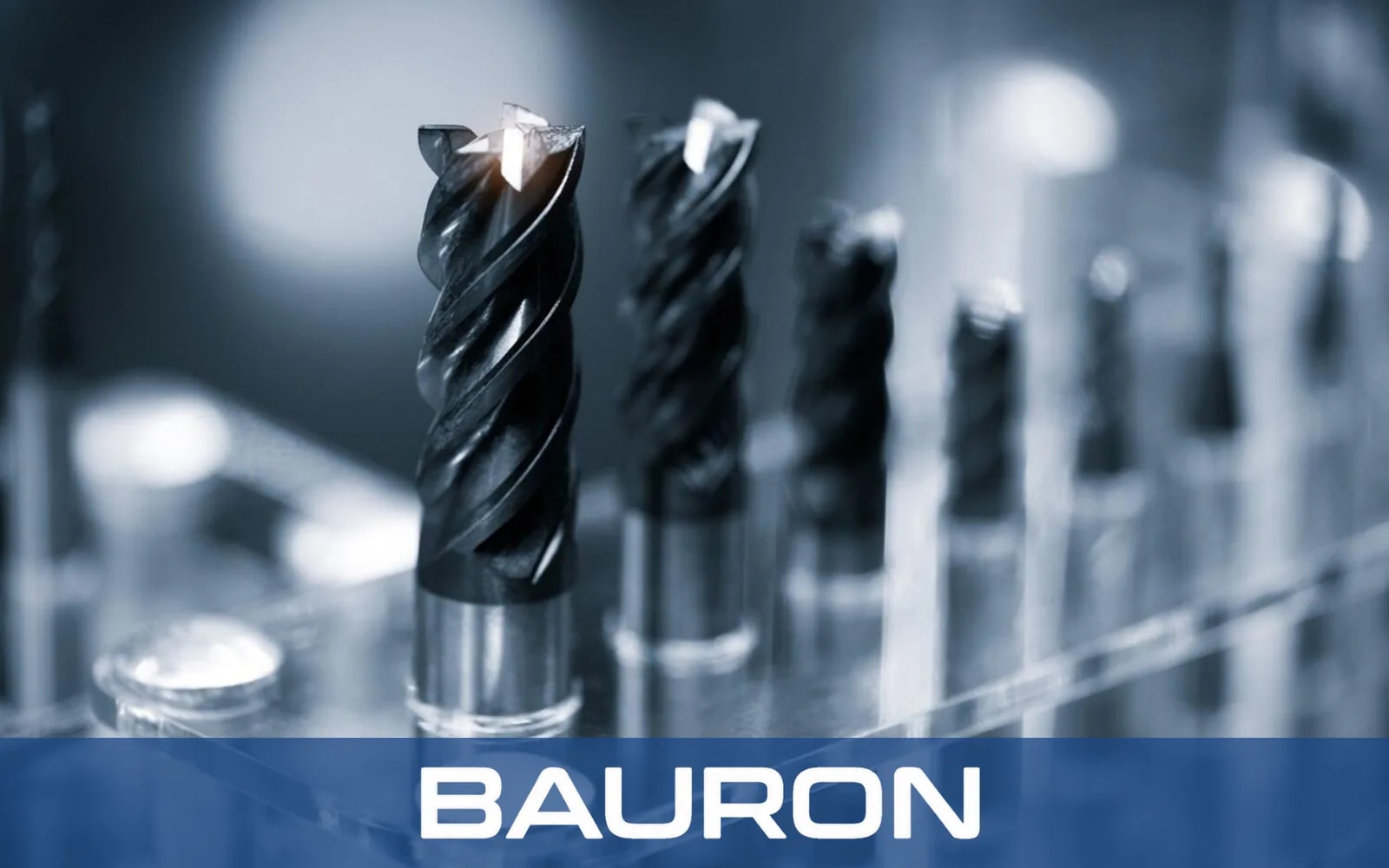
Square-end cutters support milling operations where corner sharpness, web strength, and flute geometry affect slot accuracy and surface finish. Bauron Precision Tools offers solid carbide square end mills and HSS-Co designs with relief clearance angles for slotting alloy steel, profiling structural aluminum, and pocketing superalloys.
Sharp cutting corners machine right-angle walls and shoulders. Walls that need a draft angle call for carbide tapered end mills instead.
The square end profile machines flat floors in pocketing operations.
Flute geometry and chip space support full-width slotting passes.
Side cutting edges follow part contours while maintaining a square floor-to-wall transition.
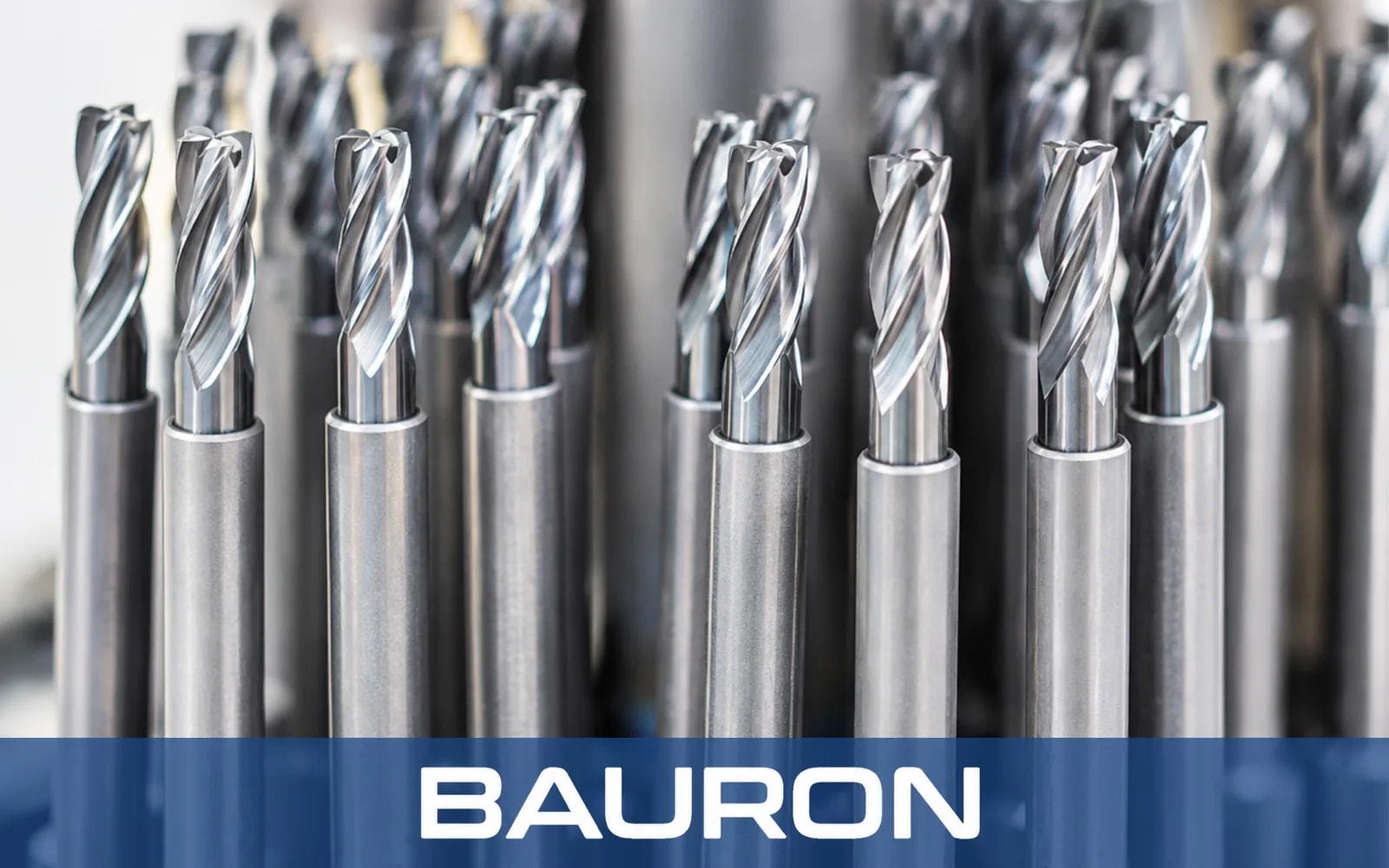
Non-standard cutting lengths, neck reliefs, and shank diameters can be produced from drawing requirements.
Variable pitch and differential helix spacing can be applied to control harmonic chatter.
Available PVD coating options include AlTiN, DLC, ZrN, and nACo.
Custom milling cutters can be manufactured from technical CAD files, blueprints, or physical sample tools.
| Specification | Range / Details |
|---|---|
| Cutting Profile | Sharp 90-degree corners with a flat cutting end |
| Tool Materials | Solid carbide or HSS-Co |
| Flute Configurations | 2, 3, 4, or 5+ flutes |
| Neck Options | Standard, extended-reach, or reduced-neck clearance geometry |
| Flute Geometry | Standard, variable-pitch, or differential-helix spacing |
| Operations | Slotting, peripheral profiling, shoulder milling, and flat-bottom pocketing |
| Material / Coating | Best For | Key Advantage |
|---|---|---|
| Positive-Rake, Polished Flutes with DLC / ZrN | Aluminum and non-ferrous alloys. | Open, polished geometry helps prevent metal welding and edge buildup. |
| Variable Helix with AlTiN / nACo | Stainless steels and superalloys including 316L, Inconel, and titanium. | Heat-resistant coatings and variable helix geometry help control harmonic chatter. |
| Heavy-Web Micro-Honed Geometry | Hardened steels up to 65+ HRC. | A heavy core and prepared cutting lips support hardened mold-steel machining. |
| Ultra-Sharp Cutting Lips | Composites and engineering plastics. | Sharp edges slice fibers while limiting fraying and burr formation. |
Material-specific options pair flute geometry and edge preparation with DLC, ZrN, AlTiN, or nACo coatings for non-ferrous alloys, stainless steels, superalloys, hardened steels, composites, and plastics.
Use square end mills for automated slotting, profiling, shoulder milling, and flat-bottom pocketing in general manufacturing and production machining.
Open flute gullets provide chip capacity in soft, ductile non-ferrous alloys.
Balance core rigidity with chip capacity for slotting aluminum and copper.
Support peripheral milling, side profiling, and general finishing in carbon, alloy, and stainless steels after bulk stock has been cleared with roughing end mills.
Designs with five or more flutes support trochoidal milling, dynamic toolpaths, and high-speed profiling in pre-hardened steels.
Relieved neck diameters provide deep-cavity clearance while limiting shank rub, the same principle used in reduced shank end mills.
A square end mill has sharp 90-degree cutting corners for right-angle walls and flat pocket floors. A corner radius end mill has rounded tips that distribute cutting forces and improve resistance to corner chipping.
The neck diameter is ground smaller than the cutting edge, allowing the tool to reach into deep pockets or ribs without the shank dragging against the workpiece wall.
Bauron recommends a 4-flute design for steel slotting and general profiling because it combines a strong core with flute space for chip evacuation.
Bauron can grind custom reach lengths, neck clearances, and flute geometries from customer blueprints, so a square end mill can be specified as custom carbide tooling when standard lengths fall short.
Carbide square end mills are the better choice for high-speed CNC milling, hardened steels and long production runs, because solid carbide keeps a sharp 90-degree corner at higher cutting speeds and temperatures. HSS-Co square end mills tolerate interrupted cuts and less rigid setups better, and cost less for short runs or manual machines.
Bauron provides design and engineering support for custom cutting lengths, neck reliefs, shank diameters, flute spacing, and application-matched PVD coatings. Share CAD files, blueprints, or sample tools for technical review.
Talk to Engineering